
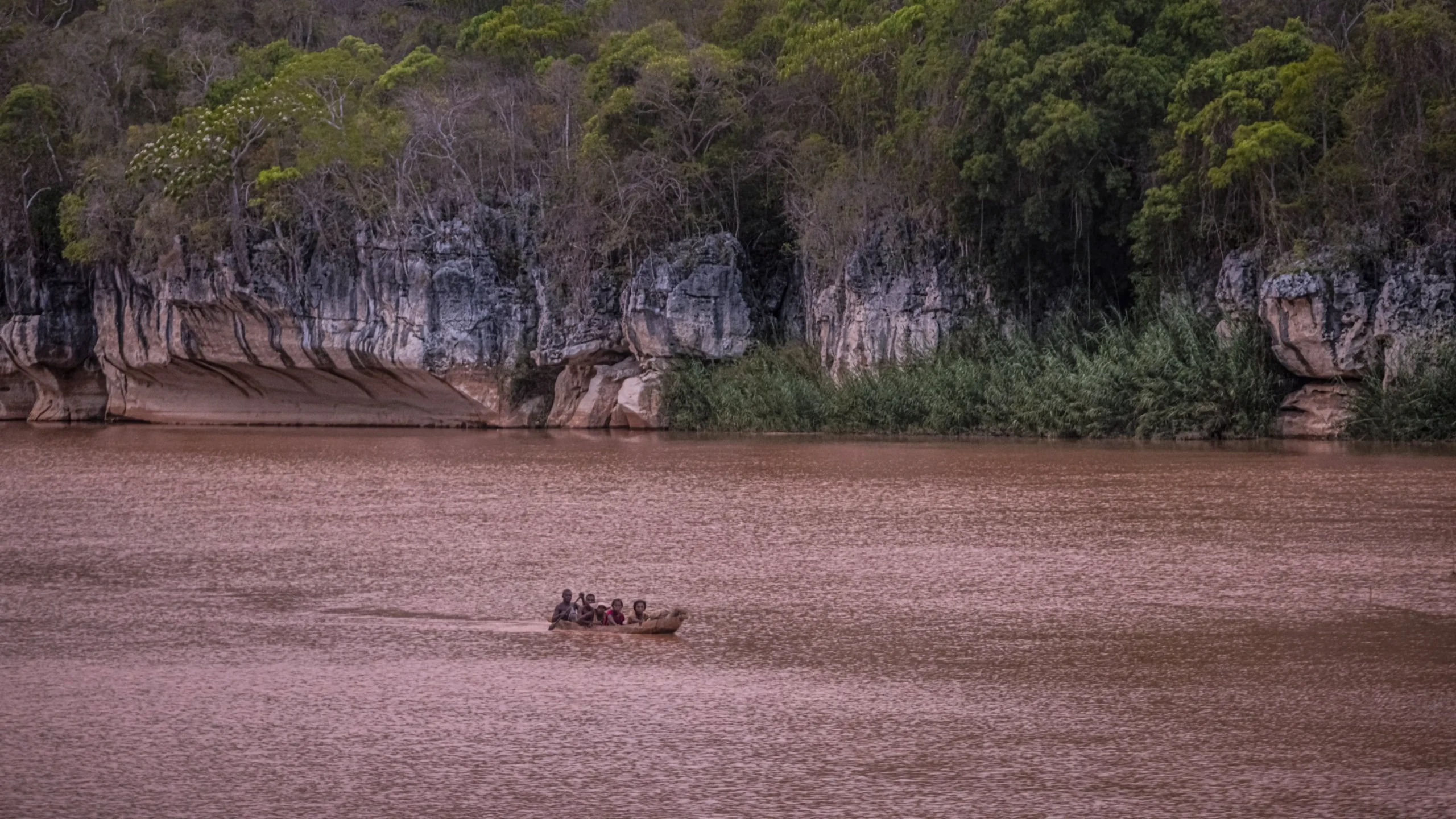
The West
Where colossal baobabs command the skyline and a labyrinth of stone conceals a world apart. This is Madagascar at its most elemental and profound.
Most landscapes are observed. The landscapes of Western Madagascar, however, must be earned. Here, the earth has fractured into a cathedral of stone: the Tsingy de Bemaraha. Navigating its razor-sharp pinnacles is not a simple walk; it is an entry into a geological saga 165 million years in the making.
The journey continues on the ground, into the dry deciduous forests of Kirindy. As dusk settles, you track the elusive fossa, Madagascar’s largest carnivore, its presence felt long before it is seen. Then, as the sun dips below the horizon, one stands before the Avenue of the Baobabs, not as a spectator, but as a guest in a silent, 800-year-old court of giants.
From the slow-moving waters of the Tsiribihina River to the quiet Sakalava fishing villages along the Mozambique Channel, this region reveals itself in layers. The West is not a mere collection of highlights. It is the raw, unfiltered soul of Madagascar.
Best time to visit
Places to visit
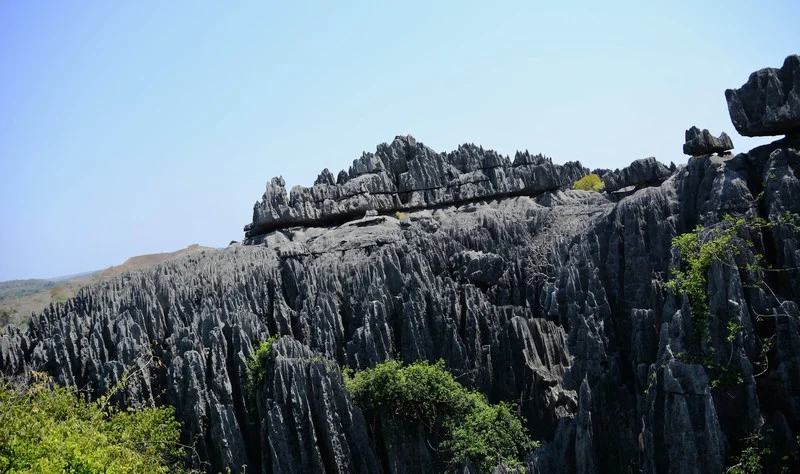
Whilst photographs show a forest of stone, they cannot prepare you for the reality of this UNESCO site. Suspended on a bridge between limestone blades, one grasps that this is not a landscape to be viewed, but a vertical world to be navigated.
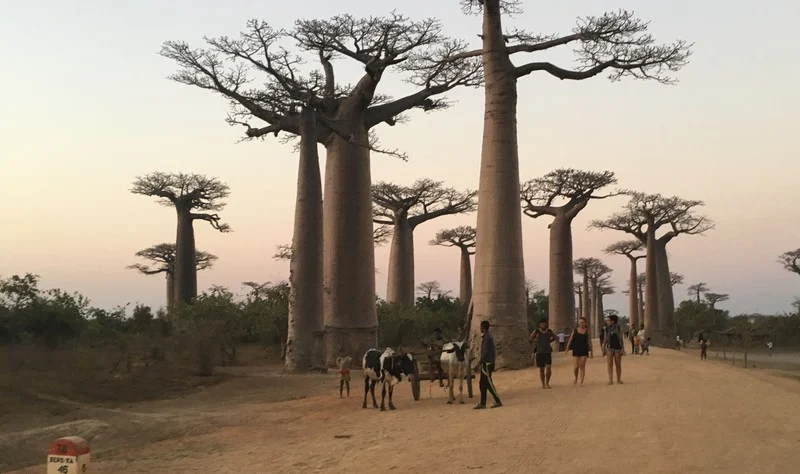
This is not merely a photogenic road; it is a monument to time itself. Standing beneath these 800-year-old sentinels at sunrise, their immense silhouettes etched against the sky, you feel the profound scale of Madagascar's history.
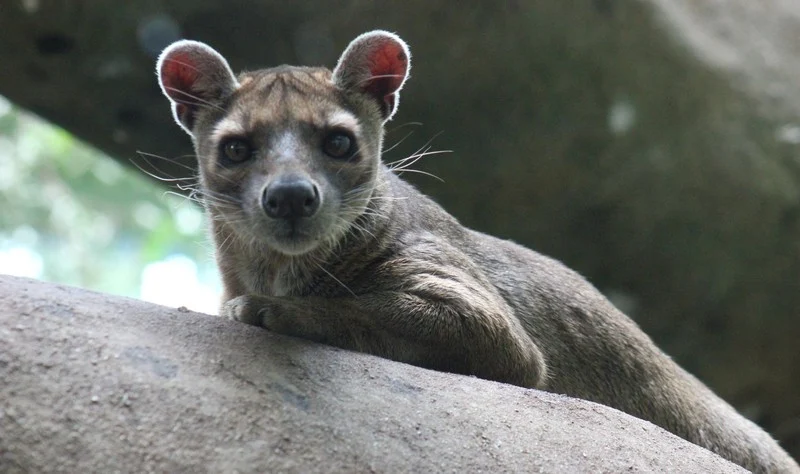
Entering Kirindy at night, the familiar world dissolves. Your guide’s torch picks out the glowing eyes of a Berthe's mouse lemur—the world's smallest primate—and you listen for the stealthy movements of the fossa.
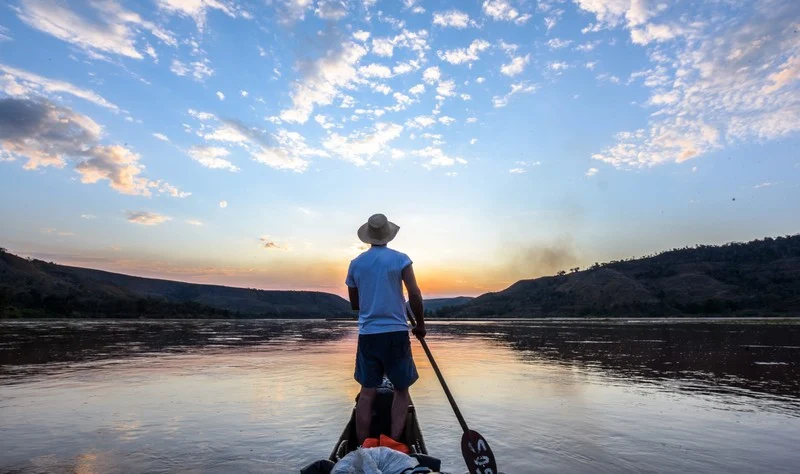
Rather than travelling overland, one can descend the Tsiribihina by riverboat, a multi-day journey into the deep interior. The river is the destination, revealing cliffs, waterfalls and villages inaccessible by any other means.
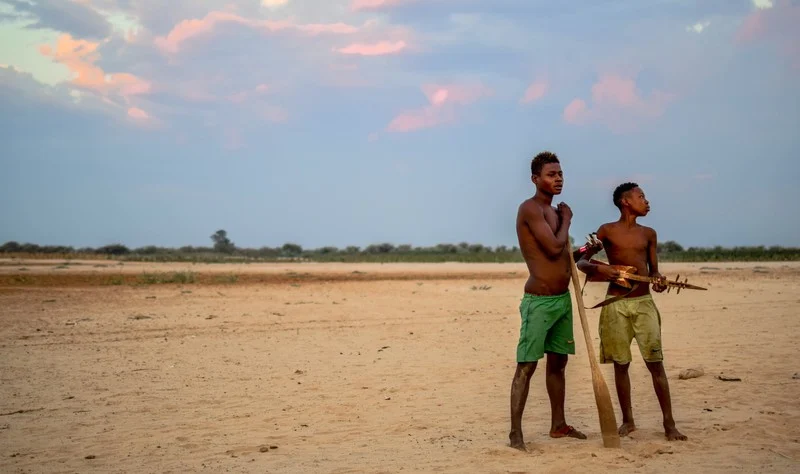
More than just coastal settlements, the Sakalava villages are living archives of maritime tradition. You witness pirogues being carved by hand and nets mended in the sun, entering a daily life shaped not by clocks, but by the tides.
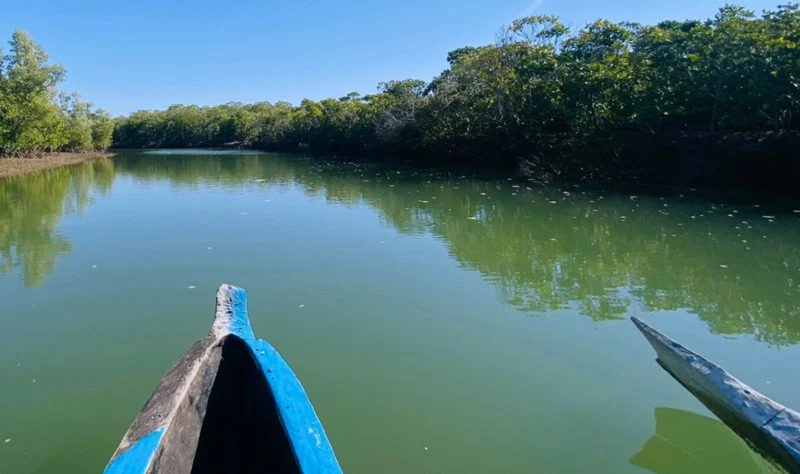
Often overlooked for the grander monuments of the West, Kivalo offers a different kind of immersion. Here, you sink into natural 40°C thermal springs, not in a spa, but in a clearing surrounded by dense bush, where local life continues undisturbed.
Where to stay
 Tented Camp
An expedition into the limestone labyrinth of north-western Madagascar.
 Forest Lodge
A modern lodge listening to the sounds of the rainforest.
 Tented Camp
Life along the river, among lemurs and sacred tamarind groves.
Frequently asked questions
Yes, circuits involve harnesses, cables (via ferrata) and suspension bridges. A good level of fitness and a head for heights are required, but circuits vary in difficulty.
Travel is by 4x4 on unmade tracks. Morondava to Bekopaka (Tsingy) is a full day's drive, often broken by a night near Kirindy Forest, making the journey part of the experience.
The prime viewing period is during their mating season in Kirindy Forest, from October to November. Sightings are possible year-round, particularly during nocturnal walks.


Explore The West by experience

Engage with the island's ancestral rites, oratory arts and community rituals.

An expedition into the world's highest concentration of endemic species.

Maximise every moment ashore with expertly guided, private day excursions.

Navigate the Eighth Continent with logistical precision and complete personal freedom.

A journey into the complex world of Malagasy ancestry and custom.