
At the far southern tip of Madagascar, in the remote Androy region, you’ll find the Cap Sainte-Marie Special Reserve, a wild, windswept sanctuary between the Mozambique Channel and the Indian Ocean. Isolated and sun-drenched, this protected area feels like the edge of the world, shaped by nature’s rawest elements.
The landscapes are dramatic: rolling sand dunes, white beaches scattered with fragments of giant eggs, towering cliffs carved by the waves, and sea caves open to the horizon. Ancient shell fragments still crunch underfoot, remnants of the long-extinct elephant bird, which vanished nearly 800 years ago. Between July and November, the area is also an excellent spot for observing migrating humpback whales.
The hot, dry climate has given rise to hardy vegetation, mostly dwarf and spiny plants typical of the southern dry thicket. Some, like Aloe millotii, grow nowhere else on Earth.
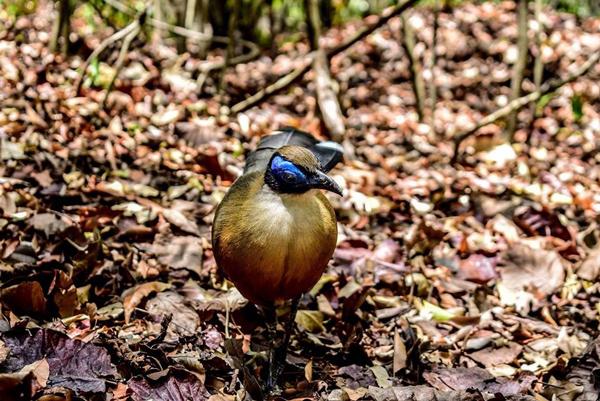
The reserve is best known for its iconic land tortoises: the radiated tortoise and the spider tortoise, both critically endangered. Their population density here is among the highest in the world. This fragile ecosystem is also home to geckos, chameleons, tenrecs, bats, a few nocturnal lemurs, and more than thirty bird species, including several rare ones.
Getting to Cap Sainte-Marie is an adventure in itself. The reserve is accessible only by 4×4, via rough tracks from Tsihombe, Taolagnaro (Fort Dauphin), or Toliara (Tuléar). But once there, the experience leaves a lasting impression. Two hiking trails allow visitors to explore the reserve in just a few hours, with sweeping views of the ocean and cliffs. Whether you’re watching tortoises, spotting whales, or searching for fossilized eggshells, the site offers a rare glimpse into Madagascar’s natural history.
Established in 1962, the reserve is co-managed by Madagascar National Parks, the FAPBM, and local communities. Despite ongoing conservation efforts, it remains vulnerable to poaching, bushfires, and unsustainable resource use. The support of responsible visitors is essential to help safeguard this extraordinary environment.
Key Facts about Cap Sainte-Marie Special Reserve
| Category | Key Information |
| Location | Southern tip of Madagascar, Androy region, approximately 50 km from Tsihombe |
| Area | About 17 to 18 km² (depending on reliable sources) |
| Landscapes | Cliffs, white beaches, shifting sand dunes, sea caves |
| Climate | Semi-arid, very hot, with rare rainfall (mainly December to February) |
| Iconic Wildlife | Radiated tortoise (Astrochelys radiata), spider tortoise (Pyxis arachnoides) |
| Other Species | Chameleons, geckos, nocturnal lemurs, rare birds, humpback whales (Jul–Nov) |
| Flora | Dry, spiny thicket, endemic plants (e.g. Aloe millot ii) |
| Activities | Hiking, tortoise and whale watching, cave exploration |
| Access | 4×4 vehicle only, rough tracks from Fort-Dauphin or Toliara |
| Conservation | Established in 1962, co-managed by MNP and local communities |