
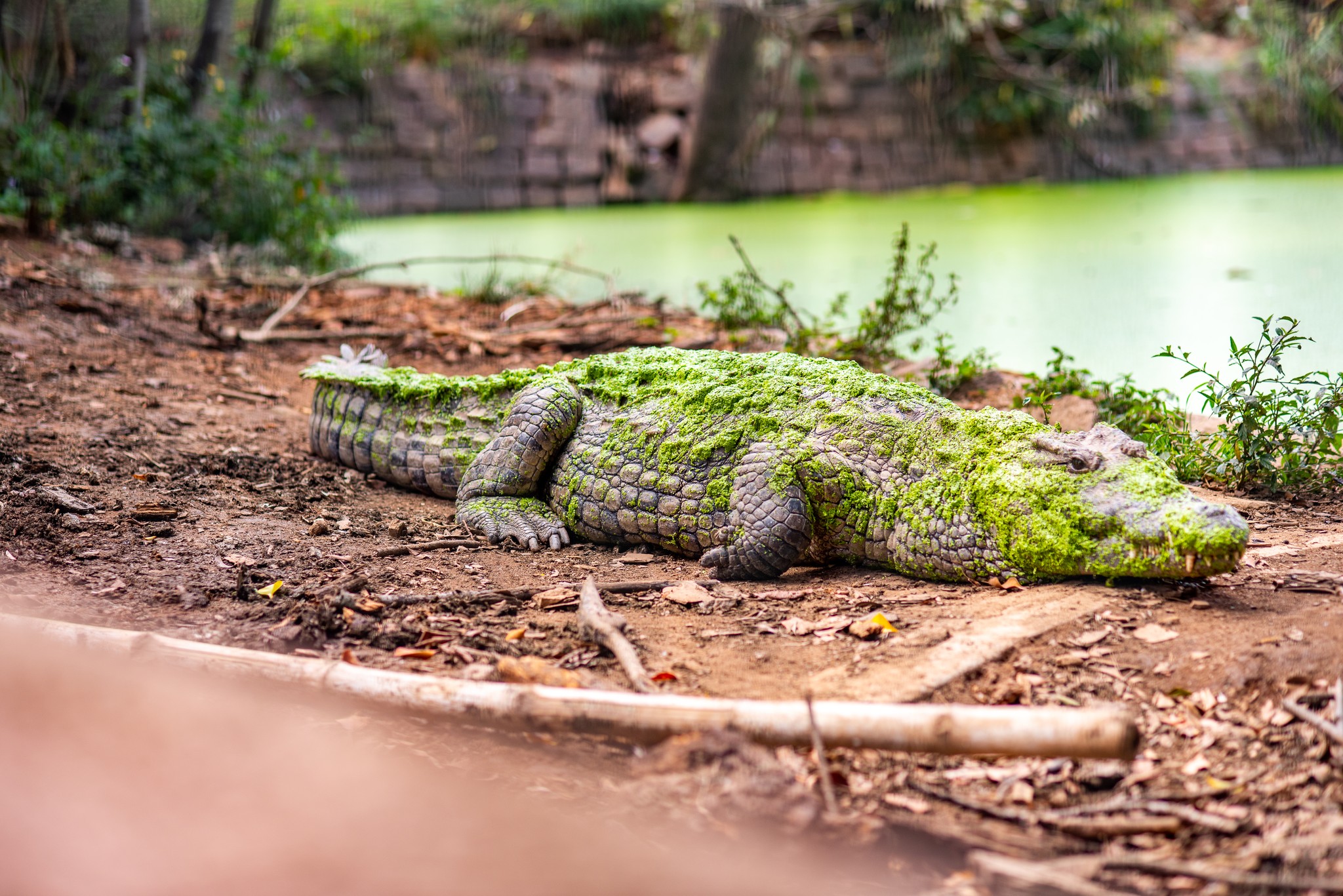
Ten minutes from Ivato International Airport, down a dirt road that most travelers never notice, lies Madagascar’s most established crocodile farm. The proximity is convenient. The experience is something else entirely.
Croc’Farm Ivato operates as the public face of Sobek Maroquinerie, a company that has mastered the complete cycle of crocodile farming in Madagascar for over two decades. What distinguishes this facility from typical wildlife parks is its integration of conservation, gastronomy, and luxury leather production—all within sight of incoming aircraft.
The Crocodile Industry Few Travelers See
The farm houses over 14,000 Nile crocodiles across different life stages. Visitors witness the entire process from hatchling to adult, but the real story unfolds in the details most guides skip. The temperature-controlled incubation rooms reveal how gender selection works—31°C produces females, 34°C yields males. This precision reflects an industry that supplies luxury goods manufacturers worldwide, particularly in France and Italy.
The leather workshop operates behind glass walls where craftsmen transform hides into products destined for Hermès and similar houses. Each skin requires twelve months from slaughter to finished leather. The process demands expertise that Madagascar has quietly perfected while the world focused on other luxury markets.
Beyond the Crocodiles
The botanical sections house endemic species that provide context for Madagascar’s broader ecosystem. Ring-tailed lemurs move through enclosures designed to mimic their natural habitat, while chameleons demonstrate the color-changing abilities that have made them icons of Malagasy fauna. The fossa—Madagascar’s largest predator—prowls in a separate compound, offering one of the few reliable opportunities to observe this elusive carnivore up close.
“The farm succeeds where many conservation projects struggle: it creates economic incentive for preservation while educating visitors about Madagascar’s unique biology.”
Culinary Exploration at Croc’Farm
The on-site restaurant specializes in crocodile cuisine, preparing the meat in traditional Malagasy styles alongside French-influenced preparations. The texture resembles chicken with a firmer bite, while the flavor profile shifts depending on preparation—grilled steaks taste mildly fishy, while stews develop deeper, more complex notes.
For travelers interested in Madagascar’s broader culinary landscape, this represents one element of what Madagascar tastes like—a cuisine shaped by geographic isolation and cultural fusion. The restaurant also serves traditional zebu and seafood dishes for those preferring conventional options.
Timing and Logistics
Feeding sessions occur Wednesday, Friday, and Sunday at 1 PM—worth scheduling around for the behavioral insights they provide. Adult crocodiles can consume up to 10 kilograms of meat during these sessions, demonstrating the powerful jaw mechanics that make their leather so valuable.
The unpaved final approach requires sturdy vehicles, particularly during Madagascar’s rainy season from November through March. Most hotels in Antananarivo arrange transport, though costs vary significantly based on waiting time and vehicle type. Understanding Madagascar’s payment methods before arrival simplifies transactions at the gift shop and restaurant.
Conservation Through Commerce
The farm participates in research programs monitoring wild crocodile populations across Madagascar’s rivers and lakes. This data collection supports broader conservation efforts while maintaining the commercial viability that funds the research. The model demonstrates how sustainable use can protect species more effectively than prohibition alone.
Staff members, many with university-level training in biology or environmental science, provide insights that extend beyond the immediate facility. Their knowledge encompasses Madagascar’s broader ecological challenges, from habitat loss to climate change impacts on endemic species.
The Souvenir Shop Reality
The retail component offers genuine crocodile leather goods at prices significantly below international luxury markets. Small wallets start around €50, while briefcases reach €400. Quality varies, but experienced leather goods buyers will recognize the superior hide treatment that has established Madagascar’s reputation among luxury manufacturers.
Customs regulations for crocodile products require CITES documentation for international transport—the shop provides necessary paperwork for legitimate purchases.
Positioning Within Madagascar Travel
Most visitors treat Croc’Farm as airport downtime, but it functions better as introduction to Madagascar’s conservation challenges. The experience complements visits to Madagascar’s national parks, providing context for the economic pressures that threaten wild habitats.
For travelers planning extended Madagascar circuits, the farm offers perspective on how commercial conservation operates in a developing economy. This understanding proves valuable when visiting community-based conservation projects elsewhere on the island.
Practical Considerations
Admission ranges from 10,000 to 25,000 Ariary per adult, with fluctuations reflecting Madagascar’s inflation rates. Children under five enter free. Most visits require 90 minutes to two hours, extending to half-day excursions when combined with dining.
The facility operates daily from 9 AM to 5 PM, year-round except during cyclone warnings. Photography is permitted throughout, though flash photography disturbs some animals and should be avoided in reptile enclosures.
Closed-toe shoes provide necessary protection on dirt paths, while insect repellent becomes essential during Madagascar’s warmer months. The location’s proximity to wetlands increases mosquito populations, particularly during evening hours.
For travelers seeking authentic Madagascar crocodile farm experiences without tourist-focused presentations, Croc’Farm Ivato delivers education through observation rather than entertainment. The commercial aspects enhance rather than diminish the conservation message, demonstrating how economic sustainability supports species preservation in Madagascar’s challenging economic environment.