
Sainte-Marie Island
The oceanic end to the eastern forest route, a quiet island of fishing villages defined by the seasonal passage of humpback whales.
Where the eastern rainforests give way to the open ocean, Sainte-Marie Island unfolds as a long, quiet strip of sand and palm trees. Unlike the dense, river-laced mainland, life here follows a slower, maritime rhythm set by calm lagoons and small fishing villages. The air is salty, the horizon is wide, and the soundscape shifts from forest calls to the lap of the tide.
The island’s character is defined by the humpback whale migration from July to September, when the channel becomes a sanctuary for mothers and calves. This is the core reason to visit. Outside this period, Sainte-Marie is a tranquil coastal retreat, but it’s the whales that justify the extension from the mainland. Access is by flight from Antananarivo or by a full-day road and ferry transfer from the coast.
Best time to visit
Where to stay
 Boutique Hotel
A quiet arrival. A considered departure. Your first night in Madagascar.
 Eco-Lodge
A private reserve on Lake Ampitabe, reached only by water.
 Mountain Lodge
A perspective of stone and light in the Isalo massif.
Frequently asked questions
A minimum of three nights is necessary. This allows for at least two dedicated whale-watching excursions, providing a buffer for weather or sea conditions.
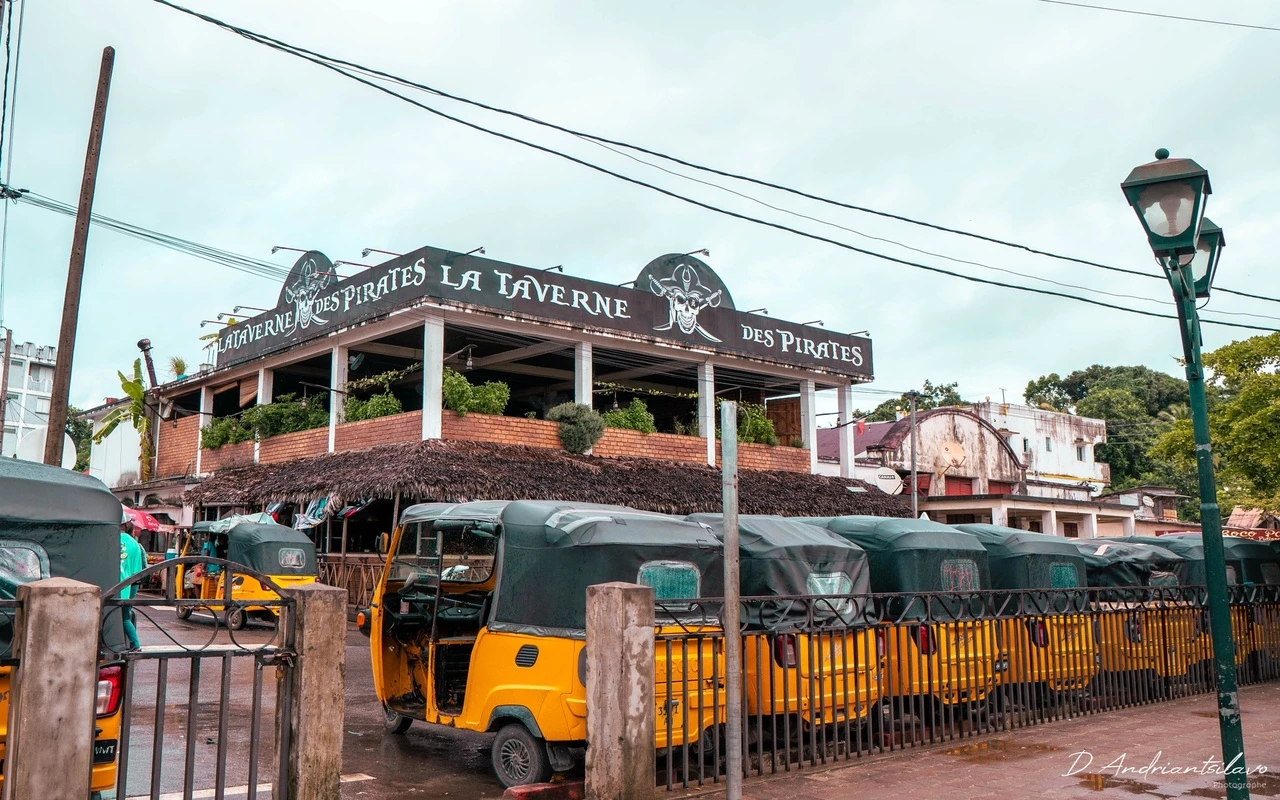
No. While it has fine beaches, its primary draw is the July-September whale migration. The island also has a distinct history of piracy and colonial settlement that adds another dimension.
From October to June, the island is much quieter. It serves as a peaceful coastal retreat with good swimming and snorkeling, but lacks the central event of the whale migration.
The most efficient route is a flight from Antananarivo. Alternatively, a road transfer to Soanierana Ivongo followed by a ferry crossing can be arranged, but this is a full-day transfer and is weather-dependent.