
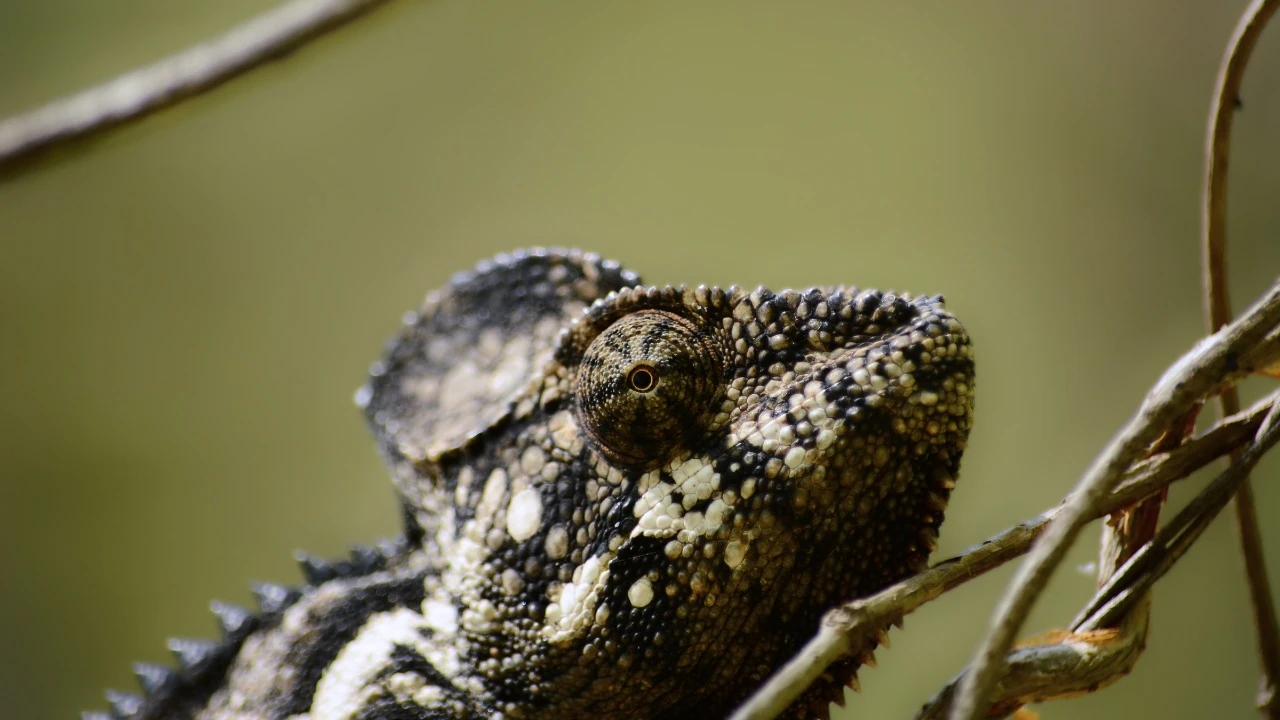
Anjanaharibe-Sud Special Reserve: Sacred Echoes & The Silky Sifaka
the haunting song of the indri in a fortress of mist-clad montane rainforest
Dawn does not arrive; it seeps in, a slow wash of silver light catching the mist that moves like smoke through the trees. The air grows cool, thick with the scent of damp earth. This is a place defined not by what you see, but by what you hear: the steady drip of water from giant ferns and a sound from the heart of the forest, a resonant call that seems to vibrate in your very bones.
This is Anjanaharibe-Sud Special Reserve, a sanctuary of steep, mist-clad mountains that forms a critical biological link in the corridor between the great massifs of Marojejy and Tsaratanana. It is one of the last strongholds for the ghostly white, critically endangered Silky Sifaka, whose troops move through the high canopy like apparitions in the mist. Hearing the song of the Indri here, in this near-absolute quiet, is an auditory event that redefines wildness.
The forest’s spiritual dimension is palpable, anchored by places like the Chute Sacrée, a sacred waterfall where local communities connect with ancestral traditions. This is not merely a landscape but a living cultural geography, where animist beliefs are woven into the very fabric of the ecosystem. To visit is to feel the energy shift from geological feature to a site of reverence.
Reaching the park gate is an expedition in itself, requiring charter flights and 4×4 transfers—which is why this ecosystem remains genuinely off the standard circuit.
Why Visit
- One of the last strongholds of the critically endangered Silky Sifaka
- Hear the haunting, long-distance song of the Indri at dawn
- Multi-day trek to the summit of Anjanaharibe at 2,064 m
- Visit the Chute Sacrée, a waterfall of immense local spiritual importance
- A true expedition: access is by charter flight and 4x4 only
- Part of a vital, undisturbed forest corridor in Madagascar's northeast
Explore in Detail
Landscape & Geography
+The Experience
+When to Go & Access
The park is best visited between April and October. This drier period offers the most stable weather and the most navigable, if still challenging, trail conditions. Reaching the reserve is a significant logistical undertaking. From Antananarivo, it typically requires a chartered flight to a regional airstrip like Andapa, followed by a multi-hour overland transfer by 4x4 vehicle. The final approach roads are rudimentary and can become impassable in the wet season. This is not a casual stop; it's a planned expedition where weather and road conditions dictate the pace and feasibility of the entire journey.
Conservation & Community
+Wildlife to Encounter
Frequently Asked Questions
This is a strenuous trip intended for travelers with a high level of hiking fitness. Trails are steep, often muddy, and undeveloped. A multi-day trek involves significant elevation gain and requires stamina and resilience.
Factoring in the complex travel logistics, a minimum of four to five days on the ground is essential. This allows for multi-day trekking, acclimatization, and provides a buffer for potential weather-related delays affecting access.
Access is an expedition. The journey typically starts with a commercial flight to Sambava, followed by a long 4x4 transfer to Andapa. From there, another rugged 4x4 journey is required to reach the park entrance. Charter flights can shorten some legs but are weather-dependent.
Accommodations are basic and expeditionary. Visits involve multi-night camping in designated forest campsites with dome tents and camp-cooked meals. There are no lodges within the reserve; the focus is entirely on the immersive wilderness experience.
Anjanaharibe-Sud is one of the most important remaining strongholds for this critically endangered species. While sightings are a key objective and well-managed by expert guides, they are never guaranteed. The thrill lies in the search within their pristine, protected habitat.
In the Field
Private Expeditions
Ready to Experience the Wild?
Every journey is tailor-made by our Madagascar experts — seamless, private, and unforgettable.


