
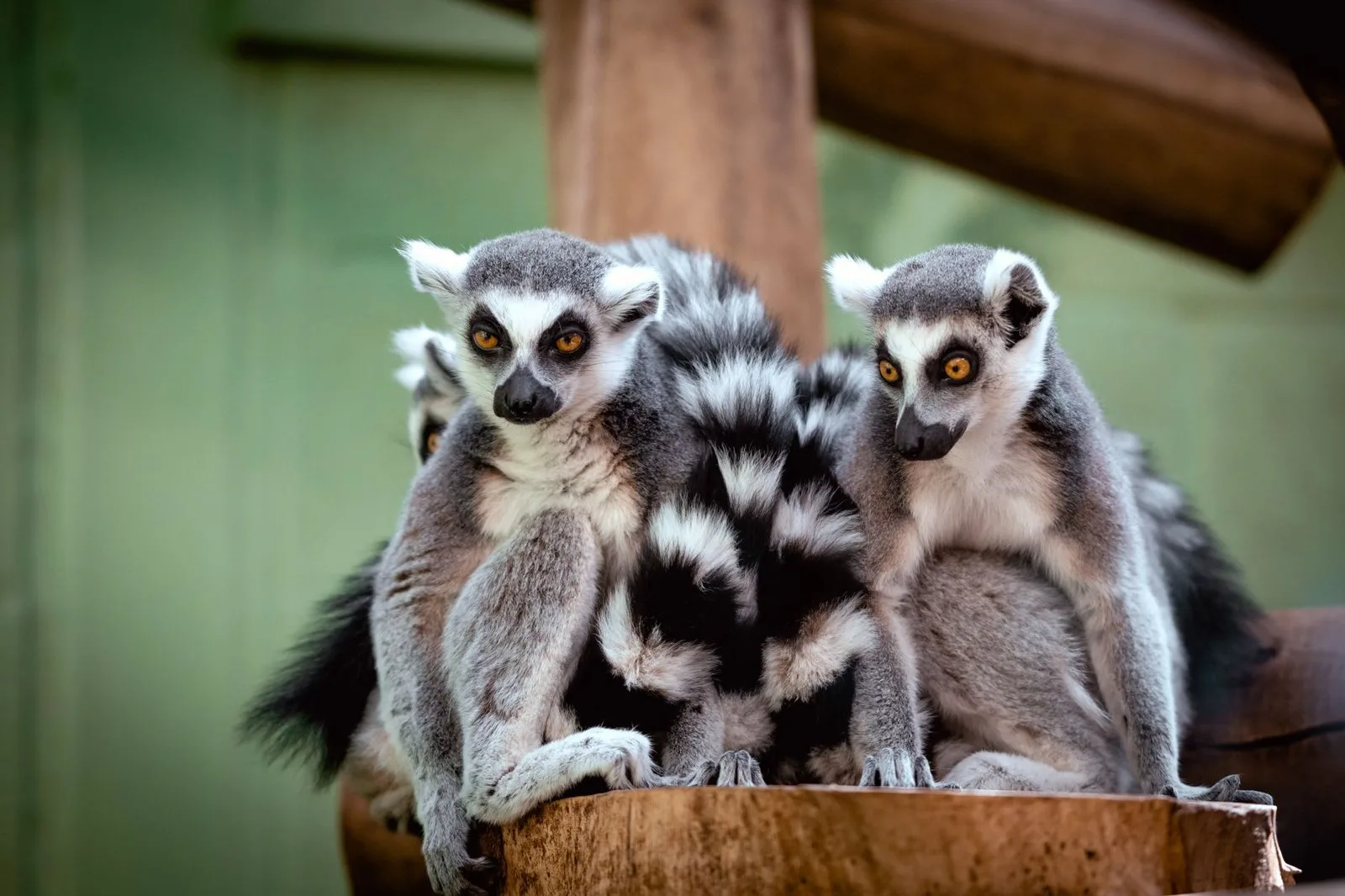
You may see a sportive lemur. But which one? The question is more complicated than you think, and the answer changes everything about your journey in Madagascar.
In the forest, your guide stops. He points to a knot in a high branch, a space that seems no different from any other tree hollow. Then you see it: a pair of eyes, a tuft of fur. It’s a sportive lemur, a nocturnal animal resting through the daylight hours. You take your photograph, you make a note. But the real story is not that you’ve seen a *Lepilemur*, but which of the 26 species you are looking at.
In the 1990s, science recognized seven species of sportive lemur. Today, that number is twenty-six. This explosion in classification is not a case of new animals appearing from thin air, but of new science revealing what has been there all along: a family of creatures so similar in appearance they are considered “morphologically cryptic.” To the untrained eye, they are nearly identical. Genetically, however, they are worlds apart, each a distinct species shaped by its own small corner of the island.
A Lemur of Place
The key to the sportive lemur is not its appearance, but its address. The animal you glimpse in the dry forests of Ankarana Special Reserve in the north is the Northern Sportive Lemur, *Lepilemur ankaranensis*. The name itself, with its suffix ‘-ensis,’ tells you it belongs to Ankarana. Travel south to Zombitse-Vohibasia National Park, and the lemur peering from a tree hole is Hubbard’s Sportive Lemur, an endangered species found in this specific corridor of forest. In the western deciduous forests of Tsingy de Namoroka, it is Milne-Edwards’s Sportive Lemur, known for its powerful hind legs built for leaping through the canopy.
They are not interchangeable. Each species is a product of its environment, from the tsingy pinnacles to the eastern rainforests. This is why the expertise of a guide is not a luxury but a necessity. They know that the Red-tailed Sportive Lemur they seek on a night walk in Kirindy Forest is not the same animal they would find elsewhere. They understand that identifying a species here is less about what you see and more about where you are standing.
“The name itself is a map. Lepilemur ankaranensis tells you it belongs to Ankarana, and nowhere else.”
The Quiet Observation
Observing a sportive lemur is an exercise in patience. These are not creatures that put on a show. They are leaf-eaters, and a Weasel Sportive Lemur might spend hours in a single tree through the night. Males are solitary and territorial. During the day, finding one often means spotting a subtle shape in the shadows. The reward is not a grand display, but a quiet moment of connection with a creature perfectly, and quietly, adapted to its home.
This quiet existence, however, masks a precarious reality. Many of the 26 species are classified as Endangered or Critically Endangered. The Sahamalaza Sportive Lemur, the Red-tailed Sportive Lemur, the Nosy Be Sportive Lemur—each faces an extremely high risk of extinction in the wild. To see one is to witness a small, fragile piece of Madagascar’s evolutionary puzzle. Knowing its specific name, and the place that name is tied to, is to understand exactly what is at stake.
The Sportive Lemur Field Guide
The difference between seeing an animal and understanding it is in the details. Let us help you read the map.
For the fuller natural history behind this identification puzzle, read our chronicle, The Same Lemur, Depending Where You Stand.