
Madagascar is not a complicated destination. It is a complex one, and the difference matters. Complexity, properly handled, is what produces the experiences that simpler destinations cannot offer.
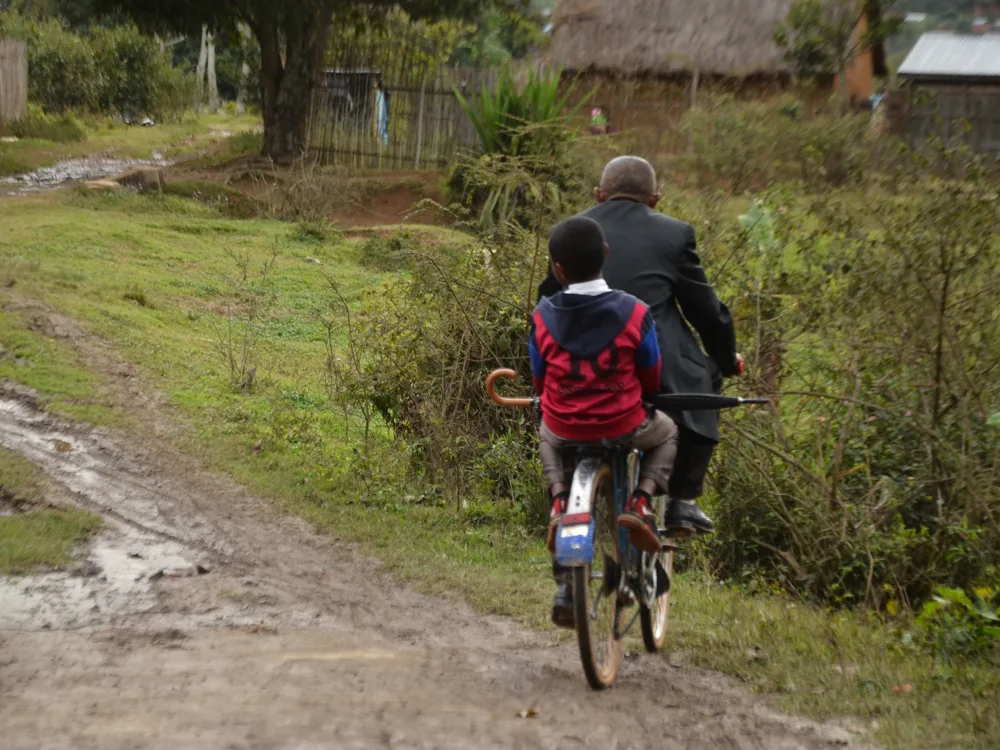
Every destination that is worth the journey asks something of the people who organize it. Madagascar asks more than most—not because it is inhospitable but because it is large, varied, and operating on its own logic rather than the logic of international tourism infrastructure. Roads that are excellent in the dry season become impassable after rain. Parks that appear adjacent on a map are separated by half a day of travel on unpaved tracks. Cultural encounters that look spontaneous on arrival have been made possible by relationships built over years. None of this is a reason to hesitate. It is a precise description of why the traveler who arrives with expert preparation behind them has a fundamentally different experience from the one who does not.
Timing: the decision that shapes everything else
Madagascar’s climate varies more dramatically by region than most visitors anticipate, and the calendar of a well-designed itinerary is built around those variations rather than imposed on them. The dry season — broadly May through October — is the window when the island’s most remote and rewarding terrain is fully accessible. The tracks to Bemaraha, the highland trekking routes, and the approach roads to the southern parks: all of these depend on dry conditions in ways that make the difference between a smooth journey and one that requires improvisation under pressure.
Within the dry season, the timing of specific experiences matters further. Humpback whales pass through the waters off Masoala between July and September. Lemur activity increases during the breeding season from September through December. The famadihana ceremonies of the highlands take place in the cooler months of the year, concentrated in a window that a well-briefed itinerary can be built around rather than hoping to stumble upon. The travelers who witness these things are not lucky. They planned for them.
Health and documents: what your agency handles, and what you confirm
A well-organized Madagascar trip arrives with its administrative and medical preparation resolved well in advance of departure. Visa requirements are straightforward for most nationalities and are handled as a matter of course. Health preparation—malaria prophylaxis; relevant vaccinations, including yellow fever for travelers arriving from risk areas; and a travel medical kit calibrated to the specific regions of the itinerary—is best confirmed with a travel medicine specialist in the six to eight weeks before departure. These are not concerns to manage on arrival. They are items to close before the journey begins so that the journey itself is unencumbered by them.
International health insurance with medical evacuation coverage is not optional for Madagascar. The island’s medical infrastructure is concentrated in Antananarivo and limited elsewhere. For a traveler spending time in remote parks or on the coast, the question is not whether anything will go wrong — it almost certainly will not — but whether the contingency is covered if something does. A premium travel policy that includes evacuation handles this entirely, and the peace of mind it provides is worth considerably more than its cost.
Transportation: the variable that defines the journey
The single most consequential logistical decision in Madagascar is transportation. The island’s road network ranges from excellent to genuinely impassable depending on the region, the season, and the recent weather. A driver-guide with a properly equipped 4×4 and genuine knowledge of the routes — not just the main roads, but the tracks, the detours, and the local conditions at any given time of year — is not a luxury addition to an itinerary. He is its operational foundation.
For legs of the journey where distances are prohibitive by road—Antananarivo to Nosy Be, to Morondava, and to Diego-Suarez—domestic flights operated by Madagascar Airlines make the difference between a journey that flows and one that is dominated by transit. A well-constructed itinerary sequences these flights around the dry season’s most reliable weather windows and books them far enough in advance to secure the preferred departure times. On the ground, the rhythm of the journey — when to drive, when to fly, when to take a boat — is the craft that distinguishes a thoughtfully designed trip from an itinerary that simply connects destinations.
Cultural fluency: what it changes on the ground
Madagascar’s cultural landscape is as layered as its natural one, and the traveler who arrives with some understanding of it moves through the island differently. The concept of “fady”—local prohibitions that vary by community and region, governing everything from what may be said in certain places to what behavior is appropriate near sacred sites—is not a bureaucratic constraint. It is an expression of the relationship between a community and its history, and navigating it with awareness rather than ignorance is the difference between being a welcomed guest and an inadvertent intrusion.
A guide who has spent years working within specific highland and coastal communities does not simply translate language. He translates context—explaining why a ceremony is organized the way it is, what the patterns in a woven textile signify, and why the village elder’s greeting follows a specific form. That layer of interpretation transforms what would otherwise be a series of beautiful but opaque encounters into something with genuine meaning. It is the most valuable thing a well-chosen guide provides, and it cannot be replicated by a guidebook or a cultural briefing document.
“The travelers who witness Madagascar’s most extraordinary moments are not lucky. They planned for them — and they had the right people behind that planning.”
What expert preparation actually delivers
The practical effect of a properly prepared Madagascar journey is simple to describe: the traveler’s attention is entirely on the experience rather than on managing its logistics. The driver knows the road. The guide knows the park. The hotel has been briefed on dietary preferences and arrival time. The domestic flight is confirmed. The medical kit is packed, and the insurance is active. None of these things require thought on the ground because they were resolved before departure.
What remains—the forest at dawn, the ceremony in the highland village, the whale surfacing off the Masoala coast, the canyon at Isalo in the last light of the afternoon—is entirely available to a traveler whose bandwidth has not been consumed by logistics. Madagascar, prepared well, is one of the most rewarding journeys on earth. The complexity that deters the underprepared traveler is precisely what protects the experience for the one who arrives ready for it.