
Kalambatritra Special Reserve: The Lost World of the Gray-headed Lemur
a lost world of humid forest, rare lemurs, and extreme isolation
The air changes first. As you ascend from the vast, sun-baked Ihorombe plateau, the atmosphere thins and cools, carrying the scent of damp earth and unfamiliar blossoms. A single green massif rises from the horizon, a fortress of life in a sea of ochre grass. The world’s noise recedes, replaced by an immense quiet punctuated only by the wind moving through the upper canopy.
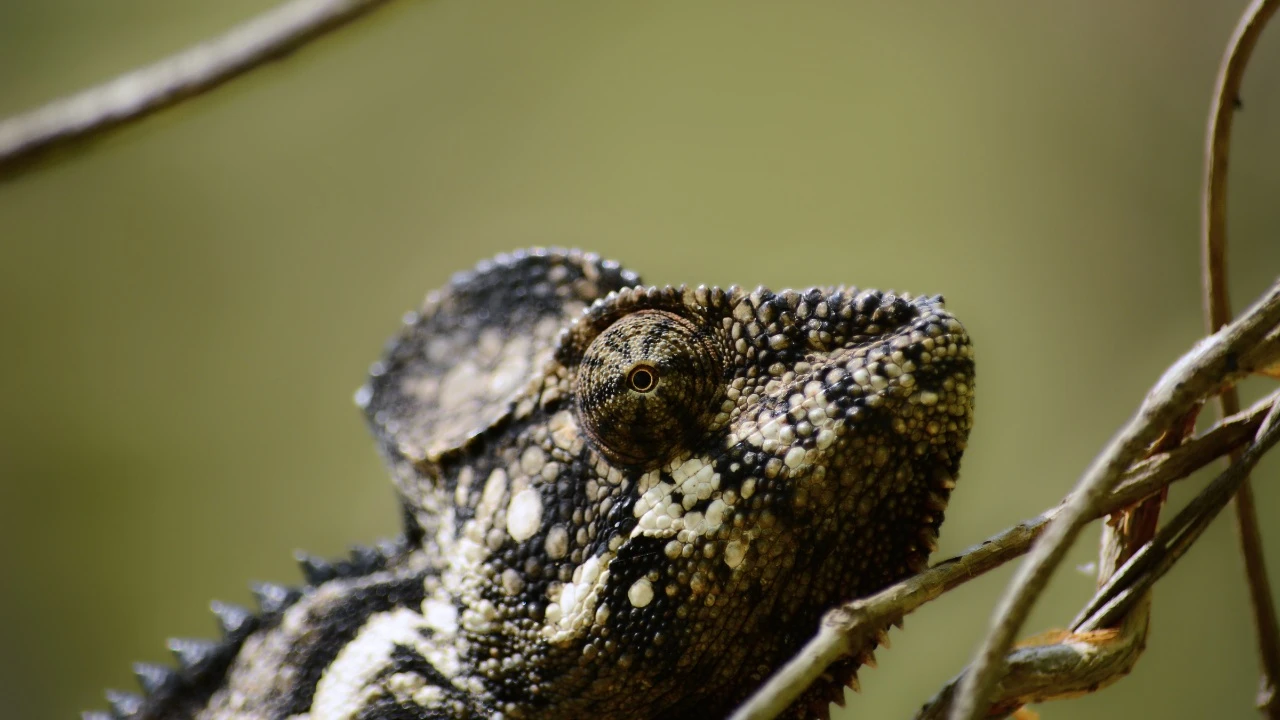
Kalambatritra Special Reserve is a humid montane forest ecosystem entirely encircled by the dry, semi-arid plains of the Ihorombe plateau—a biological island in the sky. This profound isolation has made it a crucible of evolution and the last global stronghold for the critically endangered Gray-headed Lemur. To enter is to step into a functioning fragment of a more ancient world.
Its protection is a matter of constant vigilance. Managed by Madagascar National Parks, the reserve is a critical watershed and genetic vault, with its integrity maintained against the pressures of fire and deforestation at its borders. Visitor presence, when managed with respect, provides a clear economic reason for its continued preservation.
The reserve’s sheer remoteness, requiring charter flights and 4×4 expedition logistics, ensures its ecosystem remains genuinely off the standard circuit.
Why Visit
- The last global stronghold of the critically endangered Gray-headed Lemur
- Trek in a humid forest island completely encircled by dry savanna
- A true expedition: access via charter flight and long 4x4 transfer
- Exceptional botanical diversity, including rare orchids and pitcher plants
- Reach granite peaks with vast panoramas over the Ihorombe plateau
- Vertical trekking through distinct botanical zones, from 600 to 1,600 m
Explore in Detail
Landscape & Geography
+When to Go & Access
The only viable window for visiting Kalambatritra is during the dry season, from April through October. During these months, trekking trails are passable and weather conditions are stable. Access is a significant logistical undertaking, reflecting the reserve's extreme remoteness. The journey typically requires a private charter flight to a nearby airstrip, followed by a multi-hour expedition transfer by 4x4 vehicle. This level of inaccessibility is the primary constraint, demanding significant advance planning and coordination.
The Experience
+Conservation & Community
+Wildlife to Encounter
Frequently Asked Questions
The trekking is strenuous. It involves steep, sustained ascents and descents on uneven, often muddy trails. A high level of hiking fitness and stamina is required to fully appreciate the experience.
While Kalambatritra is their last global stronghold, sightings are not guaranteed due to the lemurs' critically endangered status and the density of the forest. Traveling with an expert local guide who knows their territories significantly increases the probability of an encounter.
Access is by expedition only. The journey involves a private charter flight from a hub like Antananarivo or Fianarantsoa to a regional airstrip, followed by a long and rugged 4x4 transfer that can take several hours.
The dry season, from April through October, is the only recommended time. During this period, the roads are more likely to be passable, and the trekking trails are safer and more pleasant than in the wet season.
A minimum of three to four days is essential. This allows for the complex travel logistics to and from the reserve and provides for at least one full day of immersive trekking within the forest itself.
There are no lodges inside Kalambatritra. Accommodation is typically in expedition-style tented camps set up for your visit, providing a comfortable base for exploration while maintaining a minimal footprint.
In the Field
Private Expeditions
Ready to Experience the Wild?
Every journey is tailor-made by our Madagascar experts — seamless, private, and unforgettable.