The Primal Aria of Mantadia Andasibe
In the mist-wreathed rainforests of eastern Madagascar, an ancient chorus rises with the sun, a haunting song that speaks to the very soul of the island’s vanishing wilderness.
The air before dawn has a weight to it here, a cool, clean saturation that clings to the skin. Light is not yet an event, but a suggestion—a subtle dilution of the profound dark that pools between the giant rosewood and ramy trees. The world is rendered in sound and scent: the ceaseless, electric hum of unseen life, the damp perfume of wet earth and decaying orchids, the soft drip of condensation from fern fronds the size of a man’s arm. This is the antechamber of the day, a moment of immense and sacred stillness in the primary forests of Mantadia Andasibe.
This protected corridor, a mosaic of the pristine Mantadia National Park and the more accessible Analamazaotra Special Reserve, is one of the last contiguous domains of Madagascar’s eastern rainforest. It is a living library of evolution, a sanctuary for life forms that exist nowhere else on the planet. To step beneath its canopy is to enter a world apart, a vertical universe where the narratives of survival and symbiosis are written in the curl of a vine and the flash of a jewel-toned frog.
Then, as the first rays of sun pierce the canopy, the stillness is broken. It begins as a low, resonant call that gathers in intensity, swelling into a powerful, wailing cry that is at once deeply sorrowful and astonishingly beautiful. It is the song of the indri, the largest of all living lemurs. This is the matins of the forest, an ethereal, siren-like aria that carries for miles, a daily affirmation of existence from a creature that is the very emblem of this sacred forest. To hear it is to understand the profound antiquity and fragility of this place.
THE DISTINCTIVES
An Emerald Cathedral
The forest itself is the first marvel. Unlike the spiny deserts of the south or the eroded hills of the central plateau, Mantadia is a world of staggering biomass and emerald intensity. This is a high-altitude rainforest, where buttressed roots of colossal trees anchor themselves in the rich soil and lianas as thick as pythons ascend toward the light. The canopy is a dense tapestry, filtering the sun into a diffused, cathedral-like glow. Every surface is a substrate for life: mosses soften the bark of ancient trees, epiphytic orchids bloom in impossible locations, and a legion of ferns unfurl in the perpetual humidity. This is not a landscape to be simply observed; it is an atmosphere to be inhabited, a complex, living architecture that demands slow, deliberate exploration.
The Chorus at Dawn
The indri is the soul of Mantadia Andasibe, and the experience of finding them is the park’s signature pilgrimage. Led by an expert local guide whose knowledge is generational, you move quietly through the undergrowth, listening not just for the call, but for the subtle rustle of leaves or the soft thud of a dropped piece of fruit. The reward is a private audience with a family group. To watch these striking black-and-white primates, tailless and perpetually surprised-looking, as they leap with balletic grace between impossibly distant branches is remarkable. But to be present when they lift their heads to the sky and unleash their song is a profound, visceral encounter with the wild that resonates long after you depart.
Phantoms of the Night
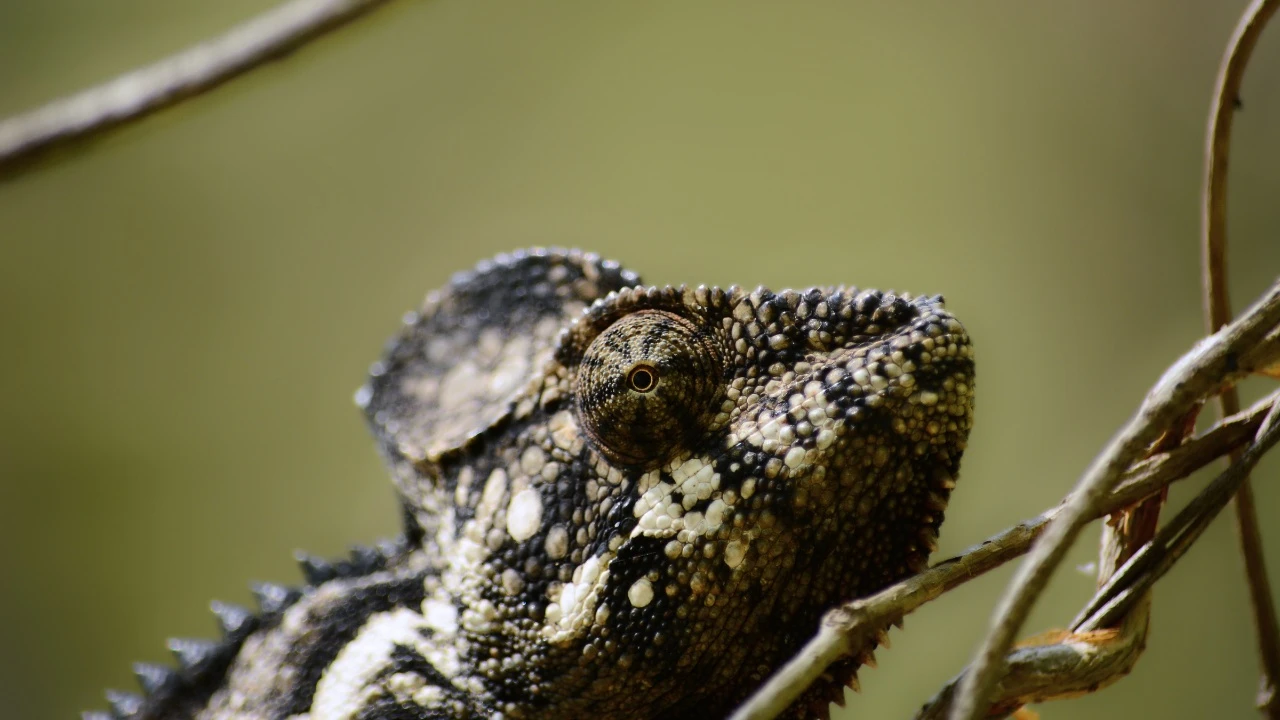
When darkness falls, a new cast of characters emerges, and the forest transforms into a nocturnal theater. A guided night walk here is not a casual stroll; it is a masterclass in observation, a search for the island’s most elusive and cryptic creatures. The beam of a torch may reveal the alien form of a mossy leaf-tailed gecko, perfectly camouflaged against a tree trunk, or the iridescent carapace of a giraffe-necked weevil. With patience and an expert eye, you might locate the world’s largest chameleon, the Parson’s, moving with geological slowness. And for the truly fortunate, there is the spectral glimpse of the aye-aye—a creature of folklore, with its skeletal finger and wide, hypnotic eyes, it is the forest’s most enigmatic secret.
The Art of Stillness
Beyond the celebrated primates, the richness of Mantadia Andasibe reveals itself to the patient observer. This is a place that rewards stillness. A moment of quiet contemplation by a stream might reveal a tiny, impossibly colorful Mantella frog. A careful scan of a tree branch could uncover a sleeping Diademed Sifaka, its orange, white, and grey fur a brilliant flame against the green. The forest floor is a miniature world of its own, a canvas of fungi, insects, and geckos. It is in these quiet, unscripted moments—finding a rare orchid in bloom, watching a chameleon’s turret-like eyes move independently—that the sheer, overwhelming biodiversity of this ecosystem truly comes into focus.
CONSERVATION PORTRAIT
Mantadia Andasibe is more than a destination; it is a bastion. This fragment of rainforest is an irreplaceable sanctuary for species facing imminent extinction, a critical genetic reservoir for the island’s unique biodiversity. The indri, culturally sacred and unable to survive in captivity, depends entirely on these forests for its future. The pressures of slash-and-burn agriculture and illegal logging are relentless at its borders. Therefore, a visit here, when undertaken with a conscious and responsible partner, transcends tourism. It becomes a quiet, critical act of stewardship. The revenue from thoughtful, low-impact travel provides a tangible economic alternative for local communities, funding guides, patrollers, and reforestation projects that are essential to the park’s continued existence.
Places like this are rarely visited — they are carefully reached. Through Vivy Travel Madagascar, a private journey to Mantadia Andasibe can be seamlessly woven into a bespoke Madagascar itinerary.
Where to Stay
Regional Context
PRACTICAL INTELLIGENCE
Park Category: National Park and Special Reserve
Key Wildlife Species: Indri, Diademed Sifaka, Common Brown Lemur, Aye-aye, Parson’s Chameleon, Leaf-tailed Gecko
Best Season to Visit: April through October, for drier conditions and optimal wildlife viewing.
Medical Resources: Advanced medical facilities are limited in the region. Comprehensive travel and medical evacuation insurance is essential. Vivy Travel Madagascar ensures all partners adhere to stringent safety protocols and have established emergency procedures.
Access & Transfer Note: Approximately a three- to four-hour drive from Antananarivo on a paved road, best navigated by a private, chauffeured 4×4 vehicle.
Booking Recommendation: The intricacies of crafting a seamless journey through Madagascar’s remote landscapes require expert, advance planning. We recommend contacting your travel designer well in advance to curate your bespoke itinerary.
EDITORIAL CLOSE
This journey is not for the collector of sights, but for the connoisseur of moments. It is for the discerning naturalist who understands that true luxury is not about opulence, but about access—access to the rare, the authentic, and the profound. It is for the traveler who finds value in the deep knowledge of a local guide, the privilege of a private encounter with a critically endangered species, and the quiet satisfaction of knowing their presence contributes to the preservation of a masterpiece. You arrive in Mantadia Andasibe seeking the song of the indri. You leave with the forest’s hymn etched in your memory—a sound that is both a celebration of life and a plea for its continuance.
Searching for Something Wild?
Vivy Travel Madagascar curates private journeys through the island’s most extraordinary wilderness.
+261 34 46 326 00