
Montagne d’Ambre National Park: A Volcanic Cloud Forest of Miniatures
an isolated volcanic cloud forest, home to the world's smallest chameleons
The drive north from Antsiranana begins amid dry, sun-baked plains, but as the road climbs, the atmosphere physically changes. The air cools and gains weight, heavy with moisture that beads on fern fronds and clings to the skin. The soundscape shifts from the rustle of baobabs to the steady drip of a forest generating its own microclimate. This ascent marks the crossing into an entirely different biome.
As Madagascar’s oldest national park, Montagne d’Ambre protects a montane cloud forest perched atop an ancient volcanic massif. Isolated from other woodlands, it acts as the essential water tower for the Diana region, capturing trade-wind moisture and feeding the rivers that sustain the lowlands. Its elevation has created a pocket ecosystem biologically distinct from the surrounding landscape, harbouring over a thousand plant species.
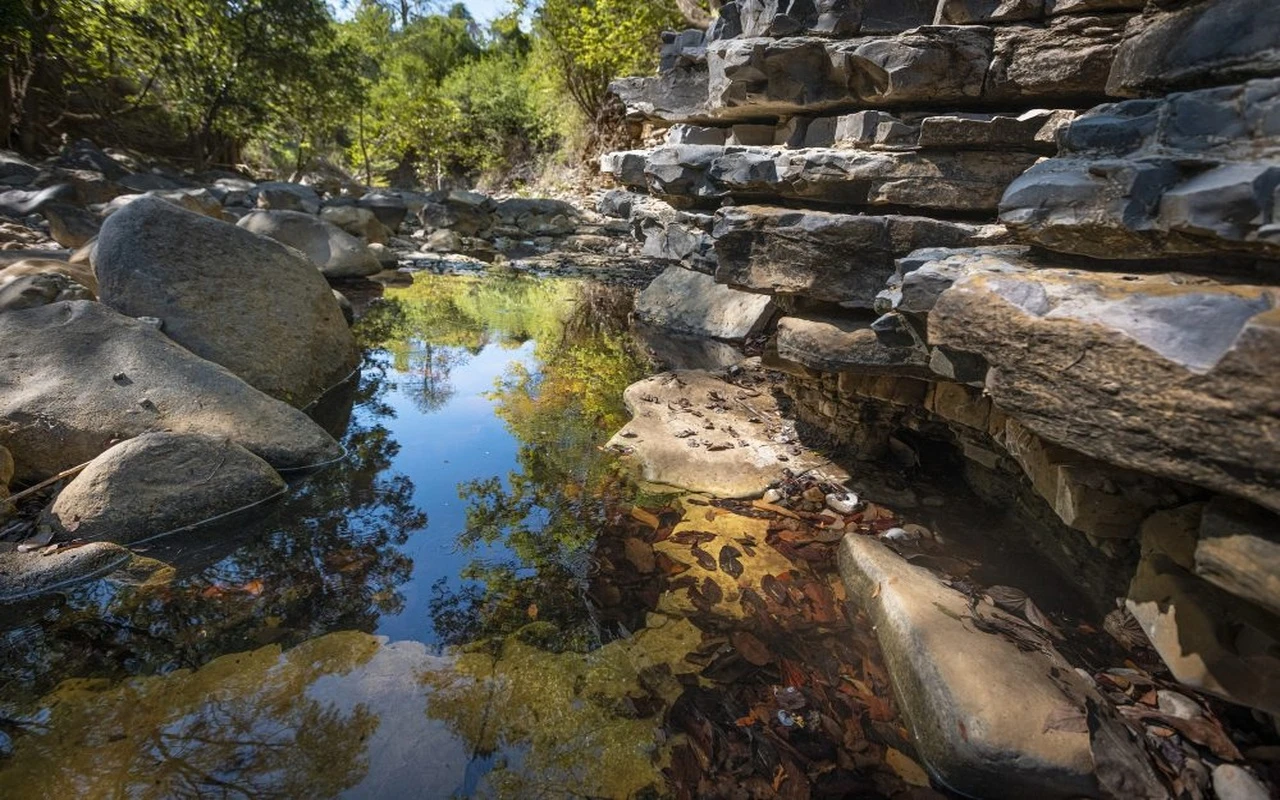
For the local Antankarana people, this hydrological lifeblood forms the region’s spiritual core. Specific waterfalls, including the Cascade Sacrée, are revered as sacred places of ancestral connection where the physical and spiritual worlds intersect. Here, the forest exists not merely as a resource, but as a living entity deeply woven into local cosmology.
Comprehending this dense environment requires looking beyond the sheer scale of the canopy, relying on an expert guide to decode the intricate, often camouflaged wildlife hidden within the undergrowth.
- The cool, misty refuge of a montane cloud forest
- Search for Brookesia, the world’s smallest chameleons
- A critical “water tower” for northern Madagascar
- Home to the sacred waterfalls of the Antankarana people
- Sanford's brown lemur and crowned lemur in the canopy
- Easily accessible by 4x4 from Antsiranana (Diego Suarez)
Montagne d’Ambre functions as a biogeographical island, an 18,200-hectare sanctuary centred on a volcanic massif rising to 1,475 meters. This altitude intercepts moisture-laden winds, fostering a lush rainforest ecosystem abruptly contrasting the surrounding semi-arid terrain. The volcanic geology sustains a network of streams, waterfalls, and high-altitude crater lakes, including the expansive Grand Lac in the southeast. Beneath a multi-layered canopy of giant tree ferns, lianas, and epiphytic Angraecum orchids, the forest floor remains deeply carpeted in damp leaves. Almost every surface is cloaked in moss and lichen, sustained by the near-constant humidity.
Let us design a private itinerary built entirely around what matters to you.
Design Your Private Trip With Us →The park is most accessible during the dry season, from April to November, when the trails are firmer and wildlife visibility peaks. Over the wet season (December to March), heavy rains frequently render the paths extremely slippery and challenging to navigate. The park entrance lies a straightforward, one-hour drive from Antsiranana (Diego Suarez) by 4x4. Ascending rapidly into the dense canopy, the route offers a striking introduction to the diverse ecological zones of the greater Diana region.

Forest lodges overlooking the sea on a volcanic island
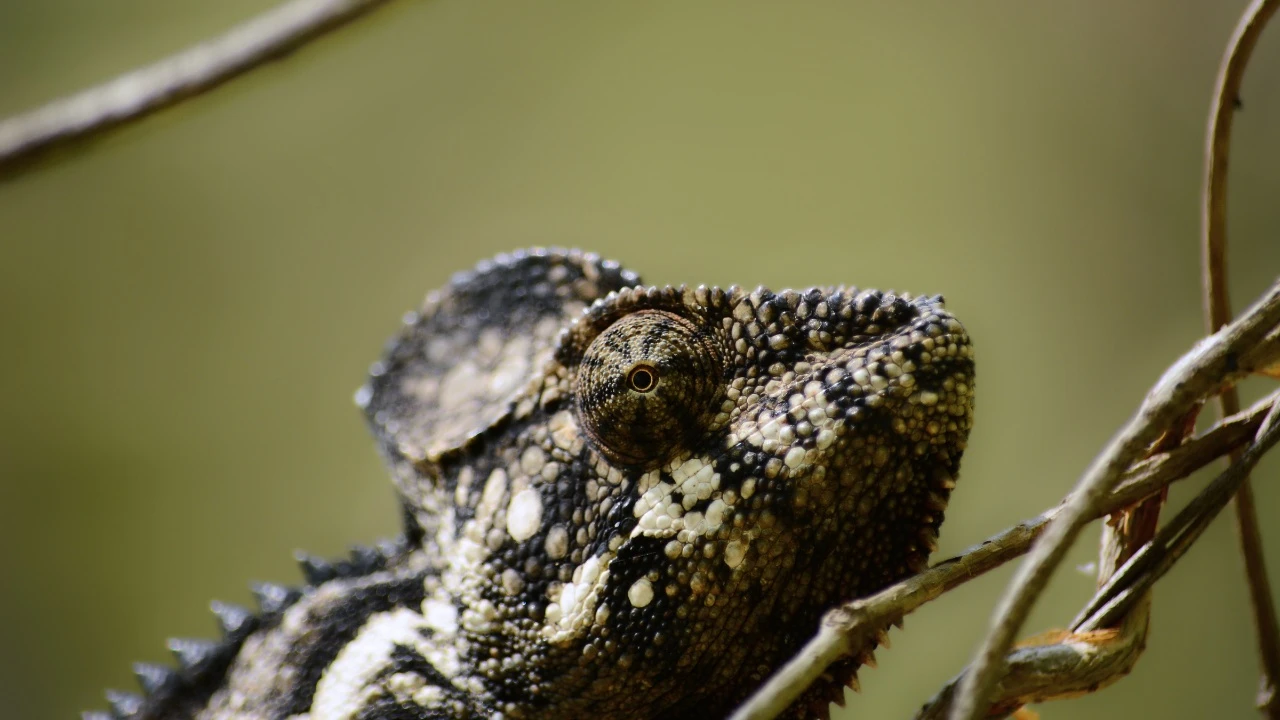
View Property →Stepping into the forest yields an immediate drop in temperature, accompanied by the calls of 75 avian species and the steady rhythm of dripping water. Treks follow shaded trails toward landmarks like the Grande Cascade, where fortunate observers might spot crowned or Sanford's lemurs in the canopy. Yet the park’s true revelation lies in the understory. With nine unique chameleon varieties and the world's highest diversity of leaf-tailed geckos, the environment demands close attention. A guide might point to an apparently empty twig, allowing a dead leaf to suddenly resolve into a minuscule Brookesia chameleon—revealing the immense scale of the forest as merely a backdrop for highly adapted, miniature life.
Managed by Madagascar National Parks, Montagne d’Ambre safeguards a vital watershed supplying Antsiranana and its surrounding agriculture. The park's geographical isolation renders its high concentration of endemic species—including rare carnivores like the ring-tailed mongoose and falanouc—exceptionally vulnerable. Tourism provides sustainable income for nearby communities, generating a direct economic incentive for habitat protection. Sustained visitor presence and park fees fund necessary patrols and trail maintenance, defending this critical climatic refuge against the escalating pressures of deforestation and climate change.
“Best visited April – November — drier, cooler, and far easier for walking.”
Contact Us to Design Your Journey| Amber Mountain Leaf Chameleon | Also known as Brookesia tuberculata, this is one of the world's tiniest reptiles; spotting its near-perfect camouflage in the leaf litter requires an expert guide and a patient eye. |
| Sanford's Brown Lemur | A diurnal lemur often found in the mid-to-upper canopy; frequently seen in mixed groups with crowned lemurs, with sightings being quite reliable on guided walks. |
| Crowned Lemur | Easily identified by the distinctive V-shaped black crown on the females and different coloring on males; they are vocal and active during the day, moving through the canopy in search of fruit. |
| Amber Mountain Rock Thrush | An endemic bird and a prized sighting for birders; often found in clearings or on rocky outcrops within the forest, best located by its melodious song. |
| Leaf-tailed Gecko (Uroplatus) | Masters of camouflage, these nocturnal geckos are almost impossible to see on their own; specialist guides know how to find them resting against tree bark during the day. |
The cool, misty refuge of a montane cloud forest
Frequently Asked Questions
A full day allows for a solid introduction, including a good trek and waterfall visit. To truly explore the different trails and increase your chances of seeing the micro-fauna, planning for two days is ideal, allowing for a more relaxed pace.
The trails are generally well-maintained, but the ground is perpetually damp. Expect slippery roots and muddy patches, especially outside the peak dry season. A moderate level of fitness and sure-footedness is required, though the ascents are not typically long or severe.
The dry season, from April through November, offers the most pleasant conditions. The trails are more manageable, and there is less rain to interrupt wildlife spotting. The forest remains cool and misty year-round.
The park is reached via a private 4x4 transfer from the city of Antsiranana (Diego Suarez). The drive takes approximately one hour, climbing steadily from the dry coastal plains into the humid highlands of the massif.
Its main draw is the unique combination of an accessible, high-altitude cloud forest and its reputation as a hotspot for micro-fauna. While other parks have lemurs, no other place offers such a focused opportunity to witness the wonders of miniaturization in evolution, like the Brookesia chameleon.



Private Expeditions
Ready to Experience the Wild?
Every journey is tailor-made by our Madagascar experts — seamless, private, and unforgettable.