
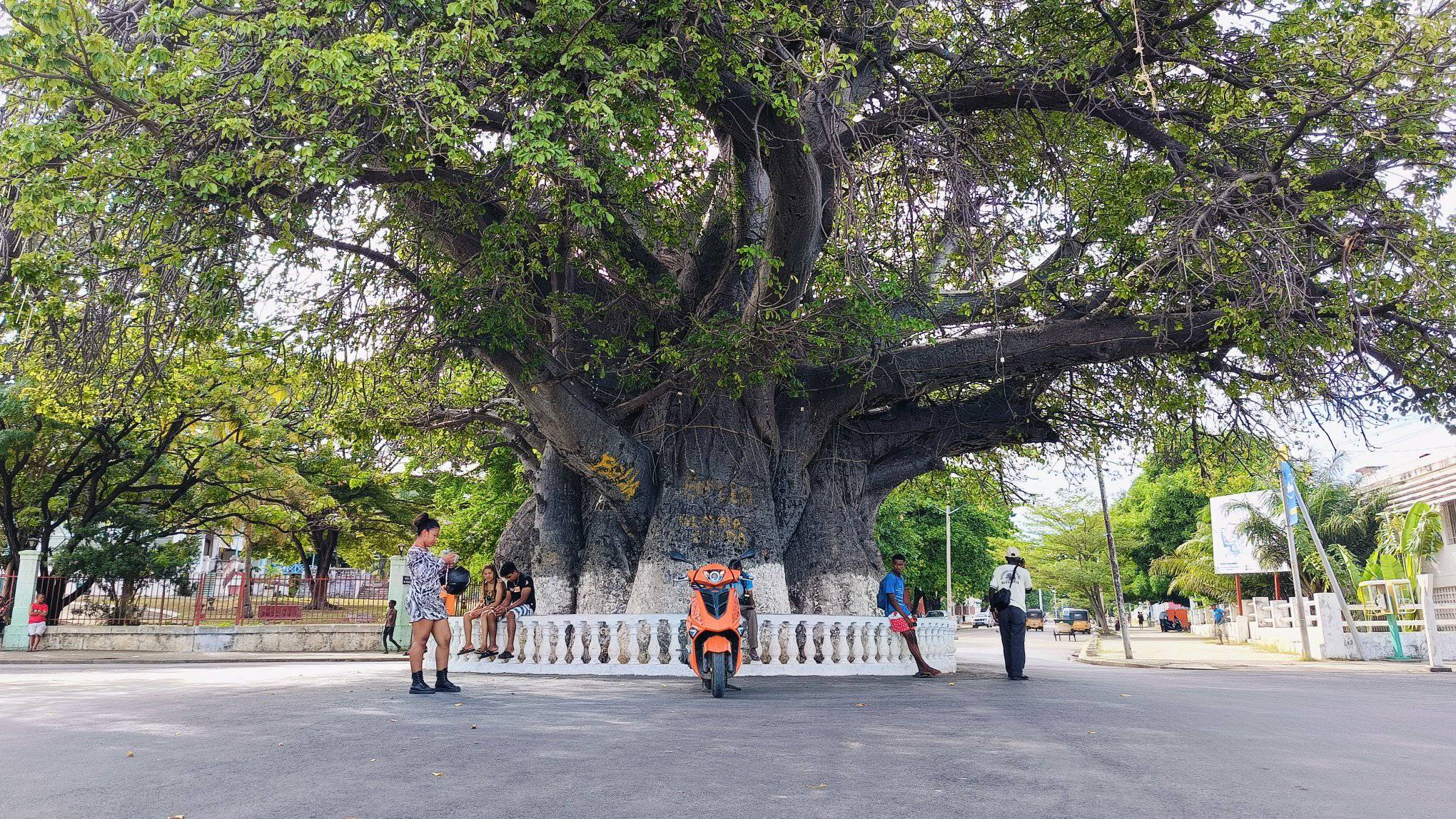
The Sacred Giant: Majunga’s 275-Year-Old Baobab Tree
Standing majestically on the seafront of Majunga, Madagascar, a colossal baobab tree has been silently watching over the city for nearly three centuries. This isn’t just any tree – it’s a 275-year-old natural monument that serves as both the city’s emblem and a sacred site where locals and travelers perform ancient rituals. Measuring over 20 meters in circumference and composed of six fused trunks, this extraordinary specimen of Adansonia digitata offers visitors a rare glimpse into Madagascar’s living history.
A Living Witness to Madagascar’s Colonial Past
The Great Baobab of Majunga began its life around 1750, as confirmed by AMS (Accelerator Mass Spectrometer) radiocarbon dating with a precision of ± 25 years. This places its origins during the early colonial period, making it a silent witness to:
- The rise and fall of the Sakalava Kingdom
- French colonial occupation and its impacts on local communities
- Madagascar’s independence in 1960
- The modern transformation of Majunga into a bustling port city
Historically, this ancient giant served a darker purpose as an execution site during colonial times, where condemned prisoners met their fate. Today, this somber past has been transformed into a symbol of resilience and cultural pride.
The Six-Trunk Mystery: A Botanical Wonder
What makes Majunga’s baobab truly unique is its six fused trunks – an extremely rare natural phenomenon among baobabs. Botanists believe this occurred when multiple seedlings grew in close proximity and gradually merged over decades. This fusion creates a massive trunk circumference that requires several people holding hands to encircle completely.
Sacred Rituals and Local Legends
The baobab is deeply embedded in local Malagasy culture, particularly among the Sakalava people. The most famous ritual involves circling the tree seven times, though the promised outcomes vary depending on who tells the story:
The Seven-Circle Ritual Variations
- For travelers: Circling seven times helps you understand and connect with the city’s spirit
- For entrepreneurs: The ritual seeks ancestral blessing for new business ventures
- For romantics: Some guides claim it ensures meeting your soulmate
- For dreamers: Others believe it grants your deepest wish
Local guides often share that the tree is inhabited by ancestral spirits who protect the city. Many residents still leave offerings of honey, rum, or flowers at its base, especially during important life events or before embarking on significant journeys.
Visiting the Great Baobab: Practical Information
Location and Access
The baobab is strategically located on Boulevard Poincaré, directly facing the Mozambique Channel. This prime seafront location makes it easily accessible and impossible to miss when exploring Majunga’s city center.
GPS Coordinates: -15.7167° S, 46.3167° E
Best Visiting Times
- Early morning (6:00-8:00 AM): Soft golden light perfect for photography, fewer crowds
- Late afternoon (4:00-6:00 PM): Dramatic sunset lighting with the ocean backdrop
- Full moon nights: Magical atmosphere for those interested in spiritual experiences
What to Bring
- Camera with wide-angle lens to capture the tree’s full majesty
- Comfortable walking shoes for the surrounding area exploration
- Respectful offerings if you wish to participate in local customs
- Sun protection – the seafront location offers minimal shade
Photography Tips and Unique Perspectives
Capturing the essence of this magnificent tree requires strategy. The massive scale makes it challenging to photograph effectively, but these techniques help:
- Include people in the frame to show scale comparison
- Shoot from the beach side to capture both the tree and ocean
- Focus on the intricate bark patterns and aerial roots
- Capture the contrast between ancient nature and modern city life
Conservation Status and Environmental Significance
As Madagascar faces increasing environmental challenges, the Great Baobab of Majunga represents both hope and responsibility. The tree serves as a carbon sink, storing approximately 500 tons of carbon dioxide – equivalent to what 100 cars produce annually.
Local conservation efforts include:
- Regular health monitoring by botanists from the University of Antananarivo
- Soil protection measures to prevent erosion from increased foot traffic
- Community education programs about baobab conservation
- Integration into Majunga’s urban development planning
Beyond the Baobab: Exploring Majunga’s Cultural Tapestry
Your visit to the Great Baobab provides an perfect starting point for exploring Majunga’s rich cultural diversity. The surrounding area features:
Nearby Cultural Attractions
- Majunga Lighthouse: Colonial-era lighthouse offering panoramic city views
- Central Market: Bustling marketplace showcasing local Sakalava crafts and cuisine
- Majunga Museum: Historical artifacts documenting the region’s multicultural heritage
- Amborovy Beach: Traditional fishing village maintaining authentic Malagasy lifestyle
The baobab’s location makes it an ideal meeting point for guided city tours, and many local tour operators begin their cultural walks from this iconic landmark. Whether you’re interested in Madagascar’s unique biodiversity, colonial history, or contemporary Malagasy culture, the Great Baobab of Majunga offers an unforgettable encounter with one of nature’s most remarkable creations – a living bridge between Madagascar’s ancient past and its evolving future.