
QUICK OVERVIEW
Menabe is not a gentle landscape. It is a theater of seasonal extremes, a territory on the western coast of Madagascar defined by a long, punishing thirst and a brief, violent deluge. This is the kingdom of the dry deciduous forest, where life has learned to wait. Its signature is architectural: the swollen, ancient trunks of baobabs holding vigil over a sparse savanna, and the dense, thorny tangle of a forest that sheds its foliage to survive. For the discerning traveler, Menabe offers an intellectual and aesthetic immersion into one of the planet’s most singular ecosystems. It is a journey into a more austere, subtle, and profoundly strange Madagascar, a place that reveals its secrets not in a flourish of color, but in the quiet, patient logic of adaptation.
GEOGRAPHICAL IDENTITY
Stretching along the Mozambique Channel, Menabe is a vast, sun-baked alluvial plain bracketed by two of the island’s great rivers, the Tsiribihina to the north and the Mangoky to the south. Its capital, Morondava, serves as the coastal gateway to this arid interior. The region’s character is dictated by its climate: a near-rainless dry season from April to November, followed by a hot, cyclone-prone wet season. This rhythm is the engine of its ecology. During the dry months, the land is transformed into a palette of ochre and grey; rivers shrink to trickles, and the forest floor becomes a brittle carpet of fallen leaves. This intense seasonality has acted as a powerful evolutionary force, sculpting life forms found nowhere else on Earth and shaping the cultural endurance of the Sakalava people who call this ancestral land home.
ECOSYSTEM ARCHITECTURE
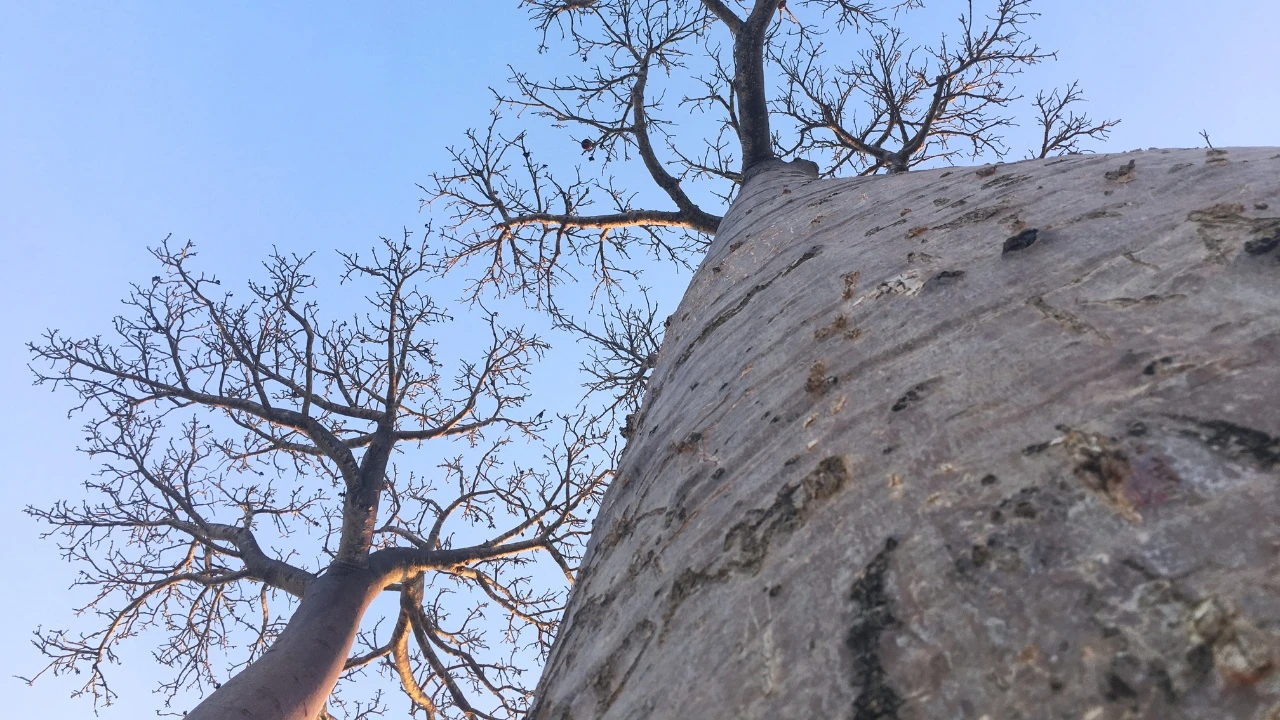
The primary ecosystem here is the dry deciduous forest, a biome that stands in stark contrast to the evergreen rainforests of the east. To conserve water, the majority of tree species drop their leaves during the long dry season, entering a state of suspended animation. The forest canopy opens, and sunlight floods a floor that seems, at first glance, lifeless. This is a landscape of texture and form—of gnarled branches, flaking bark, and the sharp points of xerophytic (drought-resistant) plants. Interspersed with and often replacing this forest is the baobab-savanna, a landscape heavily influenced by human activity over centuries. Here, fire-resistant grasses dominate, punctuated by the monumental silhouettes of Adansonia grandidieri, the most famous of Madagascar’s six endemic baobab species. Deeper within, one finds pockets of even harsher terrain, such as the spiny thickets of the Mikea Forest, a near-impenetrable world of cactus-like Didiereaceae.
BIODIVERSITY SIGNATURE
Menabe’s level of endemism is classified as extreme, a direct consequence of its isolation and severe environmental pressures. This is a laboratory of evolution where specialization is the key to survival. The region’s signature species, the giant jumping rat (Hypogeomys antimena), is a case study in this phenomenon. Neither a rat nor a rabbit, this large, monogamous rodent is the sole surviving member of its genus and exists only within a tiny, 200-square-kilometer patch of coastal dry forest north of Morondava. Its entire world is this specific soil, this particular forest. To see it is to witness a fragile masterpiece of evolution on the brink. The region is also the prime territory for observing the fossa (Cryptoprocta ferox), Madagascar’s largest carnivore. This lithe, puma-like predator is perfectly adapted to hunt lemurs through the skeletal branches of the dry forest. Lemur species here are equally specialized, from the charismatic Verreaux’s sifaka, which moves with its iconic dancing gait across the open ground, to a host of nocturnal species, like the reddish-gray mouse lemur, that emerge into the cool of the night.
THE HUMAN LANDSCAPE
Menabe is the heartland of the Sakalava kingdom, a historically powerful and proud people whose identity is deeply entwined with the land. Their culture is visible in the landscape through their distinctive funerary art. The elaborate, often erotic, carved wooden steles (aloalo) that adorn their tombs tell complex stories of lineage, life, and fertility, reflecting a deep spiritual connection to the cycle of life and death in this challenging environment. The region also holds a deeper human mystery in the form of the Mikea, a group of hunter-gatherers who live a semi-nomadic existence within the spiny forest, their presence a testament to an ancient and intimate knowledge of this seemingly inhospitable world. Engaging with Menabe is to understand that it is not an empty wilderness, but a profoundly ancestral and culturally resonant territory.
ACCESS & MOVEMENT LOGIC
The primary artery into and through Menabe is the paved RN8 from the north, though the more common overland approach for travelers is via the RN7 from the highlands, connecting to the RN34/35 which leads to Morondava. However, once you leave these relative thoroughfares, movement is dictated by the landscape. Travel is almost exclusively by 4×4 vehicle along a network of unpaved tracks, or pistes. These routes cut through sandy soils and cross ephemeral riverbeds, becoming entirely impassable during the wet season (December–March). The logic of any itinerary is therefore dictated by the dry season, when the land is firm and access to remote parks and reserves is reliable.
AIR ACCESS STRATEGY
Morondava Airport (MOQ) is the strategic linchpin for any efficient exploration of Menabe. Regular commercial flights connect it with the capital, Antananarivo (TNR), allowing travelers to bypass the long and arduous overland drive from the central highlands. Flying into Morondava positions you directly at the region’s gateway, maximizing field time and minimizing transit fatigue. For comprehensive itineraries, Morondava serves as both the entry and exit point for a dedicated western-region module.
TRAVEL REALITY
A journey through Menabe is an expedition, not a classic luxury safari. While comfort is available, the experience is defined by its authenticity and rawness. Expect dust, heat, and basic infrastructure outside of Morondava. Lodges are often simple, built to harmonize with the environment rather than dominate it. The rewards are not in thread counts but in the profound silence of the dry forest, the quality of specialist guiding, and the privilege of witnessing life forms that exist on a knife’s edge of survival. This is travel for the intellectually curious and the experientially adventurous.
KEY PARKS & PROTECTED LANDSCAPES
Kirindy-Mitea National Park is the region’s ecological centerpiece, a vast protected area that uniquely encompasses a mosaic of ecosystems: dry deciduous forest, spiny thicket, coastal mangroves, and pristine lakes. It is a stronghold for eight lemur species and a rich variety of birdlife. North of Morondava lies the Kirindy Private Reserve (also known as the Swiss Forest), a more compact and accessible research forest renowned for being one of the best places in Madagascar to reliably see the fossa, as well as a host of nocturnal creatures. The most iconic landscape, the Avenue of the Baobabs, is not a park but a protected natural monument—a striking remnant of a forest that has otherwise vanished, its colossal trees standing as sentinels along a stretch of dirt road.
KEY EXPERIENCES & SIGNATURE MOMENTS
The quintessential Menabe experience is witnessing sunset or sunrise at the Avenue of the Baobabs, as the low-angled light sculpts their massive forms against the sky. A close second is the nocturnal forest walk in Kirindy Reserve. Armed with a headlamp, the forest reveals its alternate reality: the glowing eyes of mouse lemurs, the silent geometry of chameleons, and perhaps the fluid shadow of a hunting fossa. For the dedicated naturalist, seeking out the burrow of a giant jumping rat with a specialist guide is a profound moment—a quiet encounter with one of the world’s most range-restricted mammals.
Places like this are rarely visited — they are carefully reached. Through Vivy Travel Madagascar, a private journey into Menabe can be seamlessly woven into a bespoke Madagascar itinerary.
Continue exploring Menabe: Baobab Avenue · Kirindy Mite National Park · Menabe Antimena Protected Area · The West.
Looking to
explore Menabe?
If you're looking to book a trip, then get in touch. We would be delighted to plan your dream holiday.
Want expert
advice?
We're known for our first-hand knowledge of Menabe — we'd love to help you plan.
Contact usWant to explore
more?
Discover more of Madagascar in our Travel Intelligence library.
Browse the library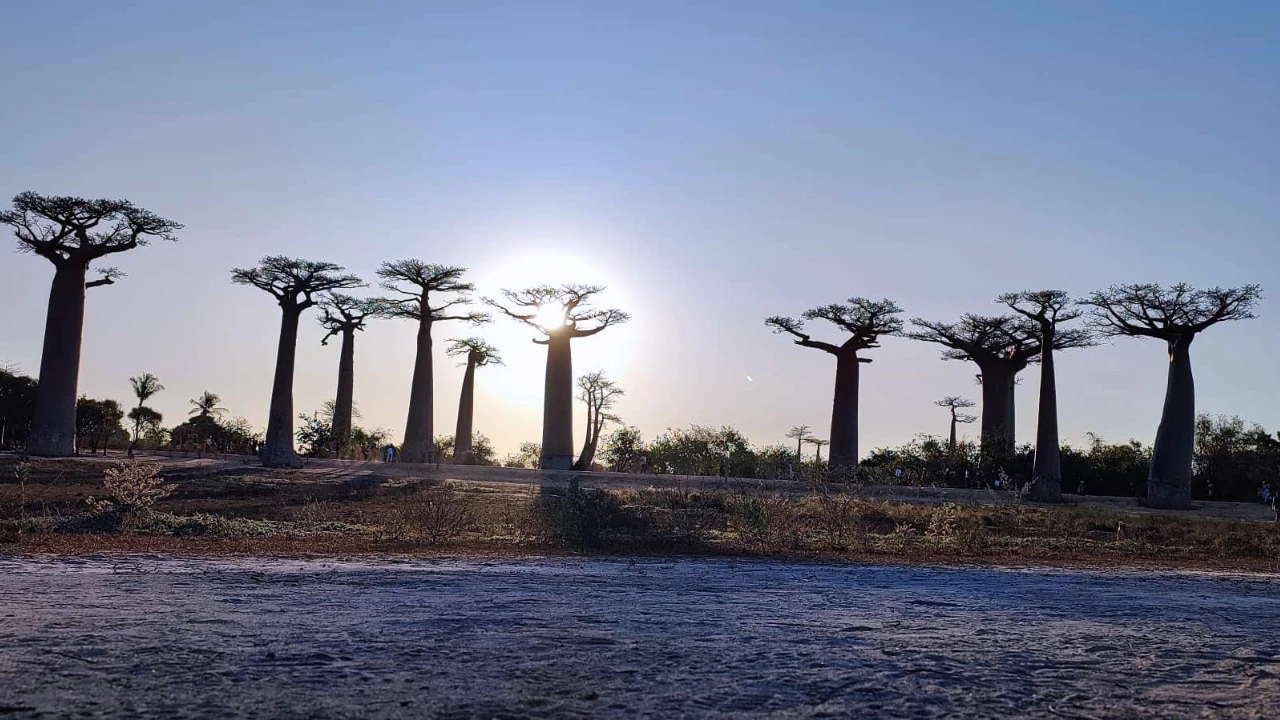
STRATEGIC TRAVEL LOGIC
Travelers choose Menabe for its stark, sculptural beauty and its powerful evolutionary narrative. It is a destination for the connoisseur, the visitor who seeks to understand the “how” and “why” of Madagascar’s biodiversity. It offers a powerful counterpoint to the lushness of the eastern rainforests, presenting a different, more challenging set of ecological questions. A visit here is a masterclass in adaptation, a deep dive into an ecosystem where the absence of water has been the primary creative force.
HOW THIS REGION CONNECTS YOUR JOURNEY
Menabe serves as the definitive western chapter in a comprehensive Malagasy itinerary. It is the logical and climatic opposite of the eastern rainforest corridor (Andasibe, Ranomafana). It often follows a journey down the RN7 from the central highlands, providing a dramatic shift in landscape and biology. For a more focused exploration, it can anchor a standalone 7- to 10-day itinerary dedicated to the unique wildlife and culture of the west, potentially combined with the limestone massifs of the nearby Tsingy de Bemaraha (when seasonally accessible).
LIMITATIONS & OPERATIONAL CONSTRAINTS
The primary constraint is seasonal. From late December through March, the wet season renders most secondary roads and park trails impassable, effectively closing the region to serious exploration. The climate is demanding, with high daytime temperatures, particularly from September to November. Infrastructure is limited, and travel requires patience and flexibility. This is not a region for the impromptu or unprepared traveler; every element must be pre-arranged.
WHY THIS REGION DEMANDS EXPERTISE
Navigating Menabe’s challenges and unlocking its rewards requires deep local knowledge. Expertise is essential for managing the complex 4×4 logistics, securing access to the best guides who can interpret the subtle signs of the dry forest, and understanding the nuanced seasonality that dictates all movement. Knowing which reserves offer the best chances for specific sightings, and having the relationships to arrange specialist encounters, transforms a simple visit into a meaningful, intelligence-led expedition.
PRACTICAL INTELLIGENCE
Region: Menabe (Capital: Morondava)
Macro Zone: West
Region Type: Dry deciduous forest & savanna
Primary Ecosystems: Dry deciduous forest, baobab-savanna, plateau
Signature Species: Giant jumping rat (Hypogeomys antimena)
Endemism Level: Extreme
Key Parks: Kirindy-Mitea NP, Morondava-area reserves
Main Access: RN 8 (Mahajanga–Morondava), Air hub: Morondava (MOQ)
Best Season: Jun–Nov (routes de piste et Tsingy sûres)
Ideal Duration: 4-6 nights
Vivy Travel: Full regional immersion requires pre-arranged expert logistics, specialist naturalist guides, and multi-modal coordination.
EDITORIAL CLOSE
To journey through Menabe is to read a story written in deep time. It is a landscape that has been shaped by continental drift, climatic severity, and human hands. It does not offer the easy consolations of a verdant paradise. Instead, it presents a more profound proposition: a chance to witness the tenacity of life at its most specialized and to understand that the value of a place is measured not by its abundance, but by its irreplaceability. In the silent grandeur of a baobab and the fleeting glimpse of a giant jumping rat, Menabe makes a powerful, ethical claim on our attention—a quiet insistence that this arid world is one of the planet’s most precious biological archives.
Baobabs, Tsingy and the Open West
Avenue of the Baobabs at dawn, limestone cathedrals at dusk — western Madagascar rewards careful planning.
+261 34 46 326 00