
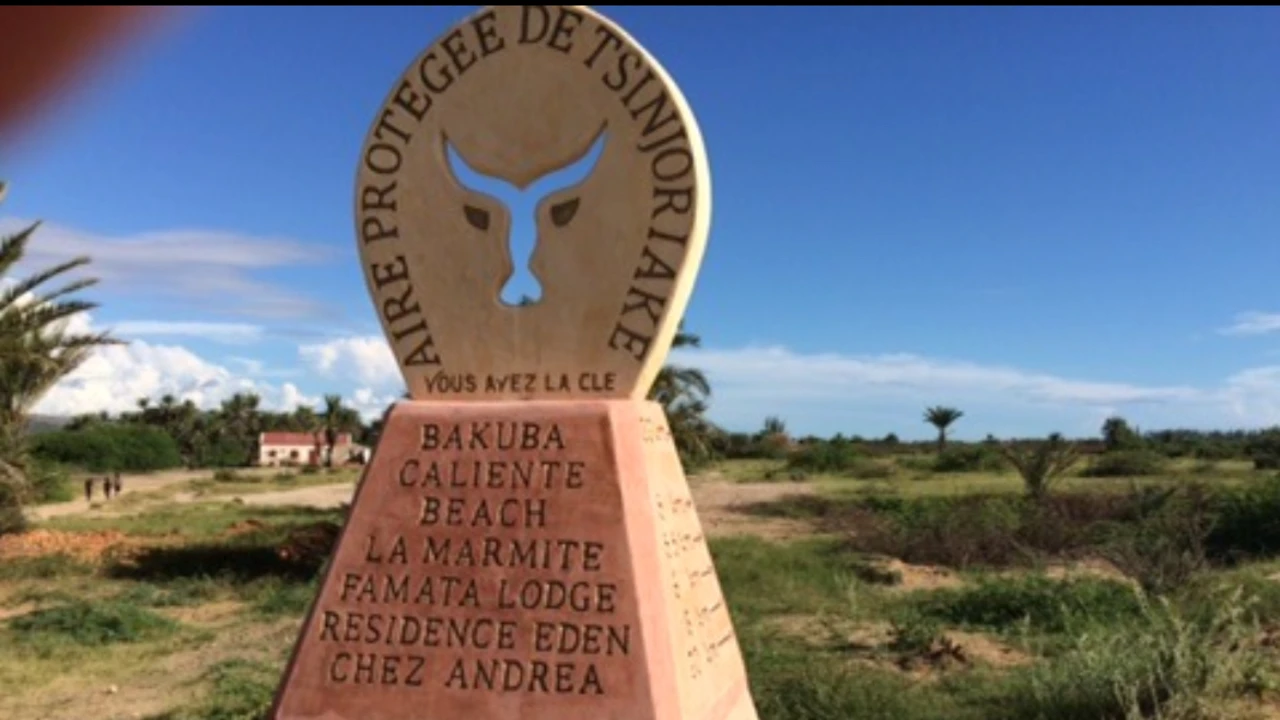
BAKUBA LODGE: WHERE GAUDÍ MEETS THE TROPIC OF CAPRICORN
On the sun-scorched coast of southwestern Madagascar, a landscape of spiny forests and sapphire sea, an architectural fever dream rises from the red earth. Bakuba Lodge is not a place of straight lines or predictable luxury; it is a profound, inhabitable sculpture born from a singular, audacious vision.
The journey south from Toliara is a preamble to the surreal. The air grows thick with the scent of salt and dry soil, the light sharpens, and the primeval shapes of baobab and octopus trees punctuate the horizon. Then, it appears. A collection of undulating, terracotta-hued structures that seem to have been poured, not built. Walls curve and swell, roofs arc in impossible forms, and mosaic details catch the African sun like shattered jewels. To arrive at Bakuba is to step through a looking glass, leaving the familiar world behind for one governed by imagination alone.
Here, at the edge of the Mozambique Channel, a Belgian designer has rendered a fantasy in plaster and stone, creating a dialogue between Catalan Modernisme and the raw, untamed spirit of Madagascar. It is a place that challenges the very definition of a hotel, offering not just shelter, but a complete surrender to the artistic impulse. This is a sanctuary for the creatively curious, a retreat for those who seek not perfection, but poetry.
THE DISTINCTIVES
An Architectural Fantasia
The soul of Bakuba resides in its extraordinary form. The entire property is a masterclass in biomorphic design, a philosophy that draws inspiration from the flowing, complex shapes of nature. There are no corridors, only meandering pathways. There are no sharp corners, only sensuous, rounded junctions that invite touch. The central lodge, with its cavernous, vaulted ceilings and organically shaped apertures, feels less like a building and more like a magnificent, sun-drenched grotto. Every surface is a canvas, from the Gaudí-esque trencadís mosaic work that adorns the columns to the smooth, hand-molded plaster walls that feel cool against the skin. It’s a testament to what is possible when convention is disregarded in favor of unbridled creativity.
Chambers of Curiosity
Each of the lodge’s private bungalows and suites is a distinct chapter in the Bakuba story. Individually conceived, they eschew uniformity for character. One might feature a bed seemingly carved from the wall itself, its headboard a sweep of textured concrete. Another might open onto a private terrace where a gnarled, endemic tree has been incorporated into the architecture. The design is elemental and powerful, with palettes of ochre, sand, and indigo reflecting the surrounding landscape. Furnishings are bespoke and artistic, celebrating local craftsmanship without cliché. These are not simply rooms; they are intimate, sculptural spaces designed for repose and reflection, offering views of either the vast, arid expanse or the shimmering expanse of the sea.
A Taste of the Terroir
The culinary philosophy at Bakuba is one of elegant simplicity, guided by the rhythm of the tides and the yield of the local gardens. The open-air restaurant is the heart of the lodge, a place where the day’s conversations unfold over meals that are both honest and inventive. The menu is a tribute to the region’s bounty. Expect zebu carpaccio seasoned with wild pepper, or the catch of the day—perhaps parrotfish or tuna—grilled to perfection and served with little more than a squeeze of lime and fragrant Sakay chili. Dining here is an unpretentious affair, often taking place under a canopy of stars so dense it feels tangible, with the distant sound of waves as the only soundtrack.
SENSORY PORTRAIT
As the afternoon sun begins its descent, it casts long, dramatic shadows across the lodge, transforming its curved surfaces into a dynamic play of light and shade. The terracotta walls glow with an inner fire, from deep amber to burnished gold. The air, once heavy with heat, softens, carrying the briny fragrance of the low tide and the faint, sweet scent of sun-baked earth. The silence is profound, broken only by the chirr of a cicada or the rustle of a gecko on a plastered wall. It is a moment of pure alchemy, when the architecture and the wild Malagasy landscape merge into a single, breathtaking composition, and time itself seems to slow to the pace of the setting sun.
Experiences like this are rarely found — they are carefully accessed. Through Vivy Travel Madagascar, stays at places like Bakuba Lodge can be seamlessly integrated into a privately designed journey.
PRACTICAL INTELLIGENCE
Accommodation: 9 rooms, including 4 bungalows, 3 suites, and 2 superior rooms. The Baobab Suite offers the most expansive private space and panoramic views.
Dining: One primary restaurant serving breakfast, lunch, and dinner with a focus on Malagasy-European fusion and fresh seafood. Private dining can be arranged.
Wellness: A sculptural swimming pool serves as the property’s social and relaxation hub. In-room massages are available upon request.
Best Time to Visit: April to December, during the dry season, for ideal weather and whale watching opportunities (July to September).
Rate: From approximately $220 per night.
Booking: Reserve well in advance, particularly for the Baobab Suite. Communicate directly with the lodge to request rooms with either ocean or inland spiny forest views, depending on your preference.
EDITORIAL CLOSE
Bakuba Lodge is not for the traveler who collects five-star brands like passport stamps. It is for the aesthete, the architect, the art collector—the discerning individual who understands that true luxury lies in the singularity of an experience. A stay here is less a vacation and more a conversation with a bold, artistic statement. It serves as a powerful reminder that the most memorable journeys are not those that conform to our expectations, but those that completely, and beautifully, reshape them.