
Tsimanampetsotsa: A Journey into Madagascar’s White Desert of Salt and Stone
In the arid south of Madagascar lies a kingdom of blinding white salt and spectral baobabs, where ancient tortoises roam and legions of flamingos paint a saline lake in shades of rose. This is Tsimanampetsotsa, a landscape of profound stillness and singular life.
The first light here does not so much arrive as materialize, bleaching the immense salt flats from pewter to a brilliant, almost painful, alabaster. The air, thin and tasting of dust and minerals, carries a silence so complete it feels like a physical presence. This is the deep south of the island, a world away from the emerald rainforests of the north. Here, on the Mahafaly Plateau, evolution has sculpted a landscape of raw, minimalist beauty—a sprawling spiny thicket, one of the planet’s most otherworldly ecoregions, fringing a vast, shallow lake whose name in Malagasy means “the lake with no dolphins.”
To journey into Tsimanampetsotsa is to enter a geological time scale, a place where life has been pared down to its most resilient and extraordinary forms. It is an experience not of passive observation but of deep immersion into an environment that is at once harsh and achingly beautiful, a testament to the tenacity of life at its most extreme. For the seasoned traveler who has witnessed the great migrations of the Serengeti and plumbed the depths of the Amazon, this is a new frontier of natural wonder—subtle, strange, and utterly unforgettable.
The Alabaster Lake and Spiny Thicket
The park’s soul is Lac Tsimanampetsotsa, a hyper-saline body of water whose milky turquoise hue comes from its high concentration of limestone and sulfates. It is a painterly expanse, ephemeral and ever-changing with the light, its shores crusted with a fine white salt that crunches underfoot like fresh snow. Encircling this mineral heart is the spiny forest, a botanical marvel found nowhere else on earth. Here, the octopus-like arms of Alluaudia trees reach for the sky, their thorny branches a formidable defense, while the corpulent, bottle-shaped trunks of fony baobabs stand like ancient sentinels. To walk here with a naturalist guide is to decipher a cryptic language of survival written in thorn, bulb, and succulent leaf.
A Sanctuary for the Ancients
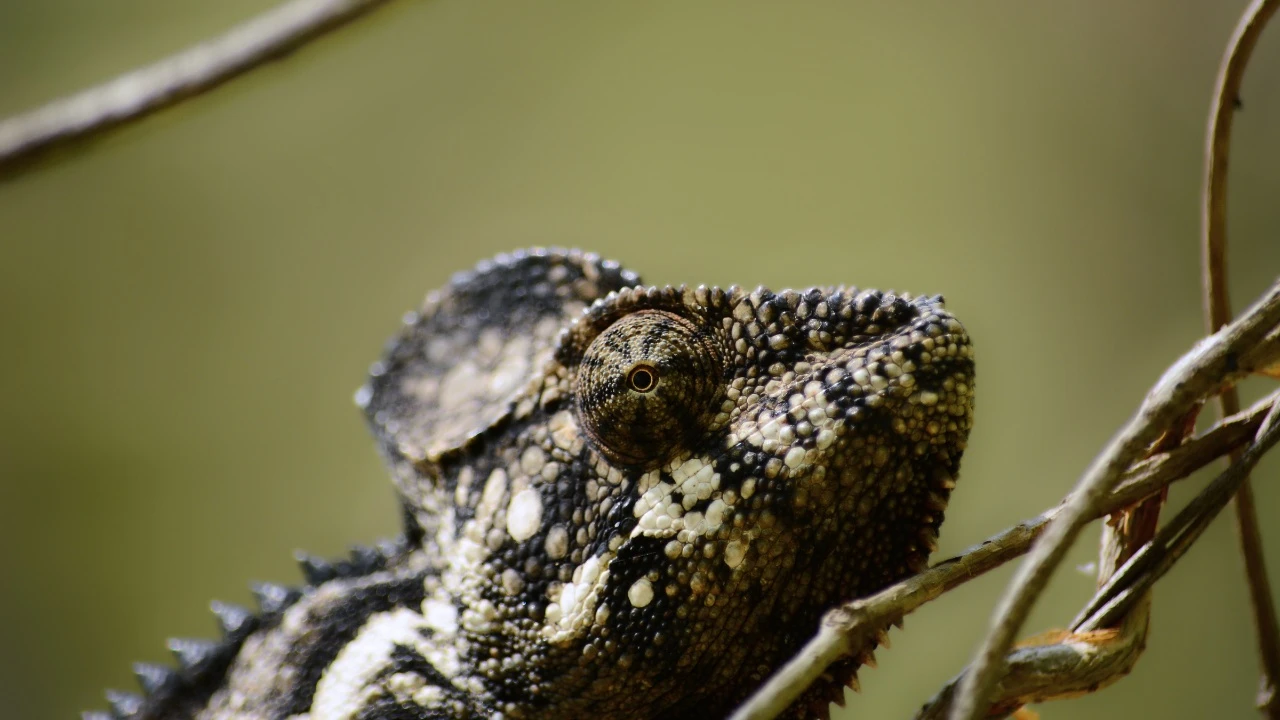
Against this stark backdrop, life persists in brilliant flashes of color and form. Tsimanampetsotsa is one of the last great refuges for the critically endangered Radiated Tortoise, a living jewel whose high-domed carapace is intricately marked with yellow star patterns. To encounter one of these majestic reptiles, moving with deliberate grace across the parched earth, is to witness a creature that seems to carry the wisdom of ages. On the lake itself, a different spectacle unfolds as thousands of Greater and Lesser Flamingos stalk the shallows, their vibrant pink plumage a shocking, glorious contrast to the pale water, their collective calls echoing across the immense quiet.
Subterranean Discoveries
Beyond the sun-scorched plains lies another of Tsimanampetsotsa’s secrets: a network of limestone caves and subterranean rivers. Descending from the brilliant light into the cool, subterranean dark is a journey into another world. Here, in sunless grottos, resides the endemic blind cave fish, a pale, ghost-like creature that has evolved in total darkness for millennia. Accompanied by an expert guide, torchlight reveals not only these remarkable fish but also the fossilized bones of extinct giant lemurs and pygmy hippos, a poignant record of the megafauna that once roamed this land. This is discovery in its purest form—intimate, scientific, and deeply humbling.
The Immensity of Silence
Perhaps the most profound experience the park offers is not something seen, but something felt: the sheer weight and purity of its silence. Standing on the edge of the great salt pan at twilight, as the sky deepens to indigo and the first stars appear with crystalline clarity, the world falls away. There is no engine noise, no distant hum of civilization. There is only the whisper of the wind, the distant cry of a flamingo, and the sound of your own heartbeat. It is a rare and powerful luxury, a moment of elemental connection that recalibrates the soul and imprints itself on the memory long after you have departed.
CONSERVATION PORTRAIT
Tsimanampetsotsa is more than a destination; it is a fragile crucible of evolution. As a designated Ramsar site—a wetland of international importance—its preservation is of global significance. The park’s unique ecosystem, a delicate balance of saline water, limestone karst, and hyper-arid flora, supports a staggering degree of endemism. Yet it is profoundly threatened by climate change and human pressures, particularly the poaching that has decimated the Radiated Tortoise population. A thoughtfully managed visit, therefore, becomes a vital act of conservation. Your presence provides direct support for the park’s rangers, funds critical research, and empowers local communities with sustainable livelihoods, ensuring this irreplaceable landscape endures not as a relic, but as a living testament to nature’s defiant artistry.
Places like this are rarely visited — they are carefully reached. Through Vivy Travel Madagascar, a private journey to Tsimanampetsotsa can be seamlessly woven into a bespoke Madagascar itinerary.
Where to Stay
Regional Context
PRACTICAL INTELLIGENCE
Park Category: National Park, Ramsar Wetland of International Importance
Key Wildlife Species: Radiated Tortoise, Greater and Lesser Flamingos, Verreaux’s Sifaka, Grandidier’s Vontsira, Endemic Blind Cave Fish (Typhleotris madagascariensis)
Best Season to Visit: May through October, during the dry season when conditions are cooler and wildlife viewing is optimal.
Medical Resources: The park is in a remote location. The nearest reliable medical facilities are in Toliara. We insist on comprehensive travel insurance with emergency evacuation coverage for all our guests.
Access & Transfer Note: Access is via a guided overland journey by private 4×4 from Toliara or Fort Dauphin, an integral part of the immersive discovery of Madagascar’s deep south.
Booking Recommendation: Crafting a seamless journey through Madagascar’s remote wilderness requires meticulous planning. We advise contacting your Vivy Travel designer well in advance to choreograph your private itinerary.
EDITORIAL CLOSE
This journey is for the traveler who seeks not just to see the world, but to feel it at its most elemental. It is for the naturalist at heart, the connoisseur of solitude, the adventurer who understands that true luxury lies in the rarity of an experience. Tsimanampetsotsa does not give up its secrets easily; it demands presence, patience, and a willingness to embrace a different kind of beauty—stark, subtle, and profoundly moving. To travel here is to do more than visit a park; it is to bear witness to the resilience of life and to become a quiet patron of one of Earth’s most singular and precious corners.
Searching for Something Wild?
Vivy Travel Madagascar curates private journeys through the island’s most extraordinary wilderness.
+261 34 46 326 00