

Befotaka-Midongy National Park: The Whisper of Unseen Worlds
a vast and remote primary rainforest demanding a true expedition spirit
Before dawn, cool vapour settles across the forest floor, muffling sound beneath the slow drip of moisture from the canopy. The air is dense, saturated with the scent of damp soil, unseen blossoms, and the steady respiration of the primary rainforest. When the first light arrives, it penetrates the lower tiers in distinct shafts, illuminating thick curtains of liana vines that drop from the upper branches.
This defines Befotaka-Midongy National Park, a vast, deeply secluded expanse of primary rainforest in Madagascar’s far southeast. As a critical biological corridor connecting remnant forests, its integrity remains vital, especially since recent models suggest up to 18% of its area could face degradation under current land-use trends. It is a demanding territory, serving as a final bastion of the island’s original wilderness.
The park’s formidable terrain makes local knowledge essential. Communities here are the forest’s hereditary stewards, and guides navigate this undergrowth with practiced quietude, interpreting a bent twig or a distant call to track species like the lowland streaked tenrec (Hemicentetes semispinosus). Your presence directly supports these frontline guardians of an irreplaceable ecosystem.
The combination of expedition-grade 4×4 access and multi-day trekking is precisely why this primary forest remains largely intact, far beyond the standard travel routes.
- One of Madagascar’s most remote and insulated primary rainforests
- Expedition-level trekking through steep, river-carved valleys
- Home to the critically endangered Southern bamboo lemur
- A true digital detox — profound solitude and no modern infrastructure
- Access is by expedition-ready 4x4 only, ensuring few visitors
- Requires significant advance planning and a high degree of physical fitness
The terrain of Befotaka-Midongy is defined by sheer verticality. Precipitous slopes and deep, river-carved valleys form a topography that has protected the region's biodiversity for millennia. The park safeguards one of Madagascar’s largest remaining blocks of lowland to montane primary rainforest, existing in distinct layers: a dense understory of ferns gives way to a mid-tier of muscular hardwoods, all beneath a closed, unbroken canopy. Walking here means navigating the colossal buttress roots of mature rosewood and ebony trees — a direct, physical encounter with a forest in its most authentic state.
Let us design a private itinerary built entirely around what matters to you.
Design Your Private Trip With Us →A journey here operates as a meticulously guided expedition. The defining moment is rarely a single sighting, but rather deep immersion in the environment. Deep within the undergrowth, your guide may pause to inspect the leaf litter for endemic Sphaeromimus pill millipedes, and the surrounding world falls still. In that quiet, you sense the sheer life force of the forest — the respiration of the trees and the hum of unseen insects. This resonant stillness offers a profound connection to a landscape operating on its own rhythm.
Every Vivy itinerary is shaped around the traveler, not a fixed template.
Plan Your Journey →The only feasible window for an expedition is during the drier season, from April to October, when unpaved tracks are stable and forest trails remain manageable. Access stands as the primary challenge and the park’s ultimate filter. Reaching the trailheads requires a multi-day journey by 4x4 vehicle from Fianarantsoa or Fort Dauphin over extremely difficult roads. This remains a serious undertaking for physically prepared travelers, requiring high fitness and an adventurous spirit. The park is located in the remote Atsimo-Atsinanana region, where logistics are complex.
Befotaka-Midongy is a vital sanctuary. It forms a critical link in the fragmented rainforests of southeastern Madagascar, serving as a genetic library for flora and fauna existing nowhere else. With the park facing potential land-use changes over time, its preservation serves as a hedge against irreversible loss. For the conservation-minded traveler, a visit functions as an act of stewardship. Your carefully managed presence provides a sustainable economic alternative for surrounding communities, empowering them as guardians of this wilderness and validating the global importance of its protection.
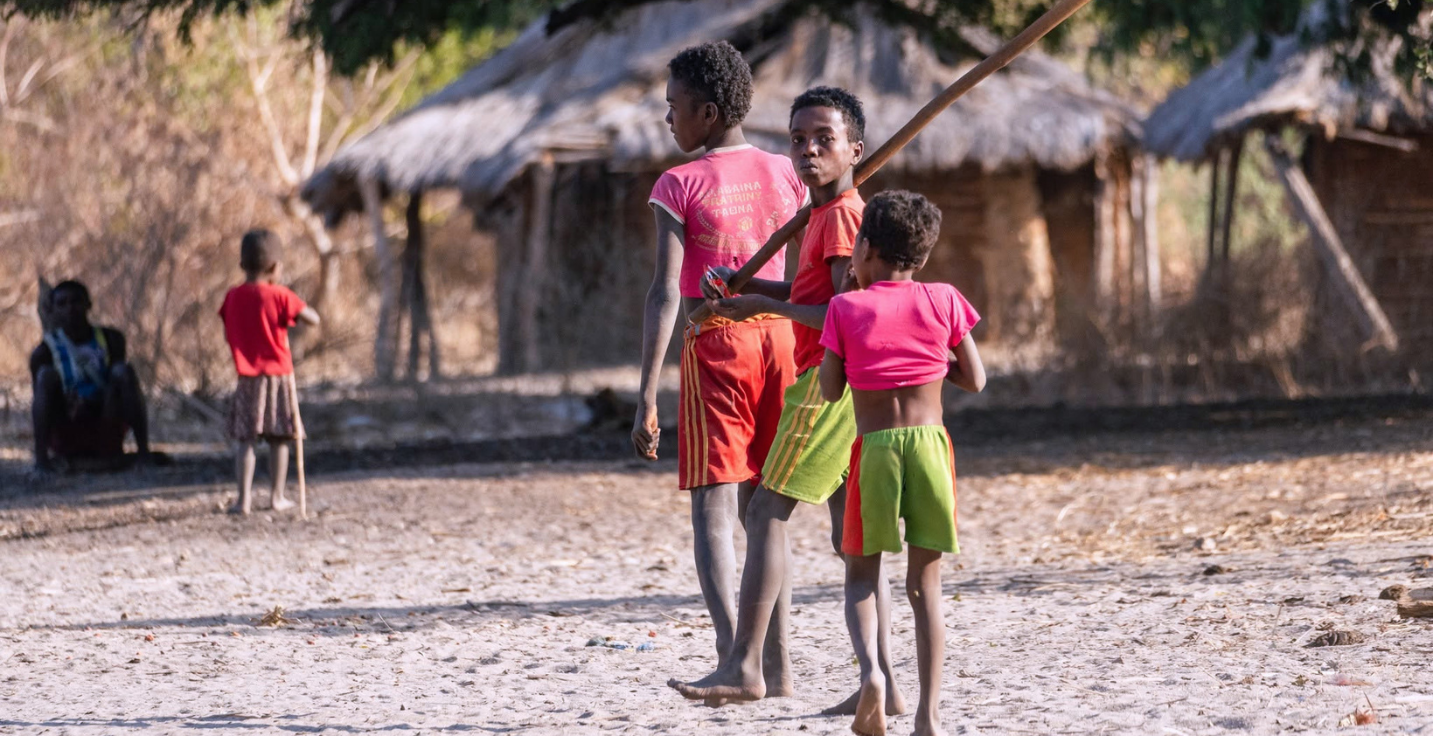
“Best visited April – October — drier, cooler, and far easier for walking.”
Contact Us to Design Your Journey| Collared Brown Lemur | Troops move through the mid-canopy, their rich russet coats a warm counterpoint to the pervasive green; sightings reward patience and quiet observation. |
| Southern Bamboo Lemur | A critically endangered specialist whose survival is tied to the park’s bamboo thickets; spotting this primate is a rare privilege for the dedicated. |
| Endemic Frogs | As dusk falls, the air thrums with the calls of dozens of jewel-like frog species, a nightly acoustic symphony best experienced from a camp deep within the forest. |
| Rosewood and Ebony | The forest itself is a key sighting; navigating the buttress roots of these ancient, giant hardwoods is a tangible connection to the deep time of this ecosystem. |
One of Madagascar’s most remote and insulated primary rainforests
Frequently Asked Questions
This is one of the most physically demanding destinations in Madagascar. It requires a high level of trekking fitness for steep, uneven, and often slippery trails, combined with the resilience for long and arduous 4x4 travel. It should only be attempted by seasoned and well-prepared trekkers.
The only realistic time to visit is during the dry season, from April through October. During the wet season (December to March), the roads become largely impassable, and the trails can be dangerously slick, making an expedition unfeasible.
A minimum of 4-5 days is necessary, with much of that time dedicated to the challenging overland transit to and from the park boundaries. The time spent trekking inside the park itself depends on the specific expedition goals and fitness levels.
Access is exclusively by a robust 4x4 vehicle, organized as part of a fully supported expedition. The journey begins from a major hub like Fianarantsoa or Fort Dauphin and takes multiple days over some of Madagascar's most difficult roads.
Medical facilities in this region are extremely basic and remote. All visitors must have comprehensive travel insurance that includes emergency medical evacuation. This is a non-negotiable requirement for any expedition into such a remote area.




Private Expeditions
Ready to Experience the Wild?
Every journey is tailor-made by our Madagascar experts — seamless, private, and unforgettable.