
Sahamalaza-Îles Radama National Park: Forest Peninsula & Remote Archipelago
a protected forest peninsula and remote coral archipelago, reached only by sea
Aboard a private dhow catching the steady winds of the Mozambique Channel, the familiar world recedes. The passage here is measured in the gradual shifting of the water’s color, from coastal turquoise to the deep indigo of the open channel. The air, thick with salt and the distant scent of ylang-ylang from coastal plantations, clears as the first of the Radama Islands appears on the horizon.
This is the approach to Sahamalaza-Îles Radama National Park, a UNESCO Biosphere Reserve bridging distinct ecological zones. The mainland peninsula preserves a critical transition area between western dry deciduous woodland and the more humid Sambirano evergreen forest, while offshore lies an archipelago of four coral-fringed islands. The park protects one of the last significant stands of this coastal ecosystem, a vital refuge for endemic species.
This is the ancestral territory of the Sakalava people, whose lives remain woven into the health of both forest and reef. Their maritime culture and stewardship form the human foundation of this wilderness, reflecting a relationship with the environment that has shaped the seascape over generations.
Access is exclusively by private sea vessel, a logistical reality that keeps this dual ecosystem entirely separate from the main travel circuits.
- Explore a dual wilderness: coastal forest and a remote island archipelago
- Arrive by private dhow or catamaran on a multi-day sea voyage
- Search for the critically endangered Blue-Eyed Black Lemur
- Snorkel over pristine coral gardens in total seclusion
- Experience the profound solitude of a genuinely isolated destination
- UNESCO Biosphere Reserve protecting a rare coastal ecosystem
The park encompasses both coastal and offshore environments. On the Sahamalaza Peninsula, a rare remnant of northwestern coastal deciduous forest survives, its canopy alive with endemic wildlife. This terrestrial portion gives way to the Mozambique Channel, where the four main islands of the Radama archipelago—Nosy Antany Mora, Nosy Valiha, Nosy Berafia, and Nosy Kalakajoro—are situated. Designated a UNESCO Biosphere Reserve in 2001, the park protects 321,000 hectares of interconnected terrestrial and marine habitats, including 10,000 hectares of mangroves that shelter eight of Madagascar's nine mangrove species.
Let us design a private itinerary built entirely around what matters to you.
Design Your Private Trip With Us →A visit here is defined by maritime rhythms. Days are spent sailing the archipelago, anchoring in isolated bays, and coming ashore to explore. On the peninsula, guided walks focus on spotting the park's endemic lemurs. Offshore, attention shifts to the water: snorkeling over vibrant reefs home to 216 coral species, kayaking through dense mangrove nurseries, and resting on ephemeral sandbars. The focus is less on covering distance and more on experiencing a dynamic environment where the line between land and sea constantly shifts with the tide.

An entire island archipelago. Yours to explore by helicopter and boat.
View Property →The park is best visited during the dry season, from May through October, when seas are calm, skies are clear, and underwater visibility peaks. Access defines a Sahamalaza journey. There are no roads into the park. Entry is exclusively by sea, typically via a private, multi-day charter on a catamaran or dhow departing from Nosy Be. This requires significant advance planning and coordination, as the vessel serves as your base for transport, accommodation, and exploration for the entire duration of the trip.
Sahamalaza-Îles Radama represents a critical conservation frontier. The transitional forests shelter the last viable populations of the Blue-Eyed Black Lemur and the Sahamalaza Sportive Lemur, both critically endangered. The reefs serve as a vital genetic bank for the wider Mozambique Channel. By working with local Sakalava communities, Madagascar National Parks (MNP) aims to create a sustainable model where conservation-focused tourism offers an alternative to deforestation and destructive fishing. Your visit, conducted with strict ecological respect, directly funds the rangers and community projects essential for the park's ongoing defense.
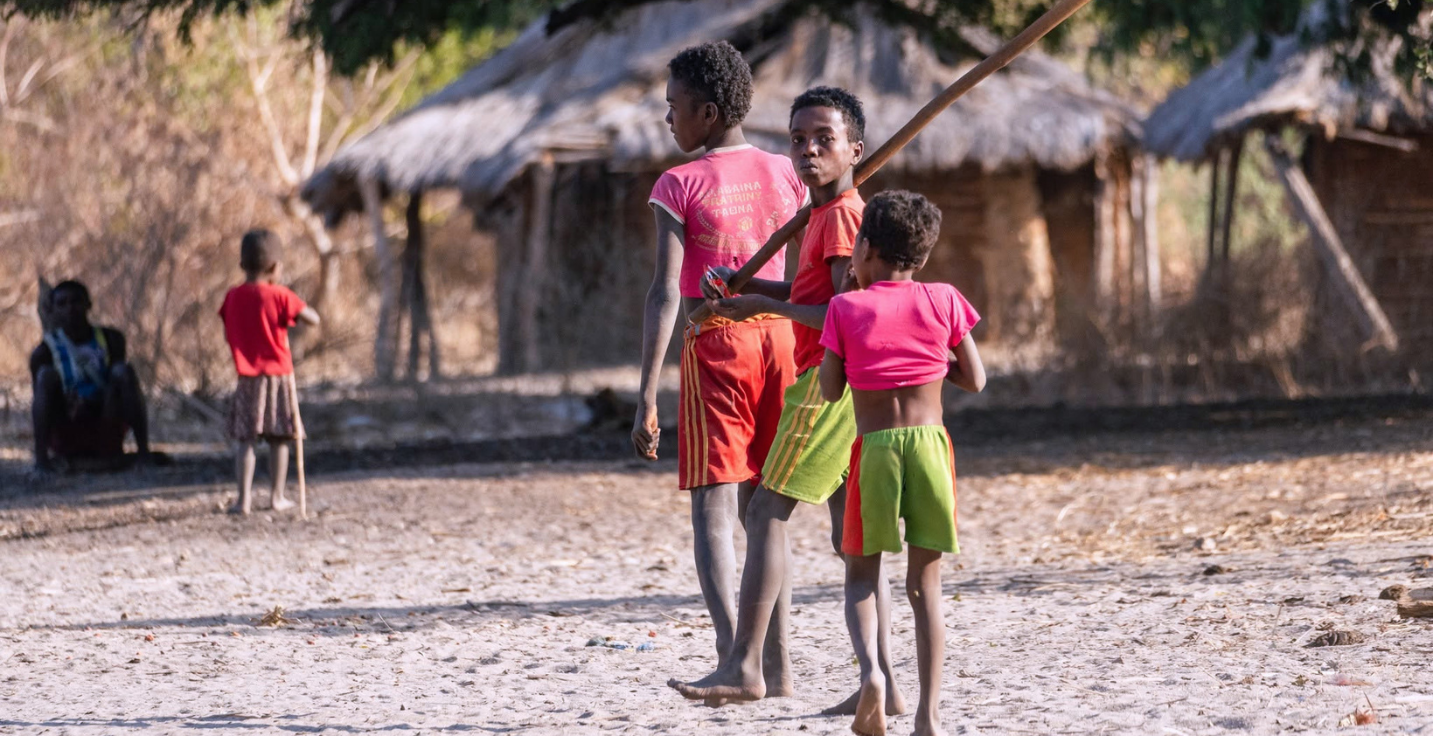
“Best visited May – October — drier, cooler, and far easier for walking.”
Contact Us to Design Your Journey| Blue-Eyed Black Lemur | One of the few primates besides humans with blue eyes; this critically endangered lemur is found only in the forests of the Sahamalaza Peninsula. |
| Sahamalaza Sportive Lemur | A nocturnal lemur known to science only since 2006; sightings require patient, expert-guided night walks in its small, protected territory. |
| Hawksbill Sea Turtle | Frequently encountered while snorkeling over the seagrass beds and coral reefs of the Radama Islands, often allowing for calm, close observation. |
| Green Sea Turtle | Another common resident of the park's marine ecosystems, spotted surfacing for air from the boat or grazing in shallow coastal waters. |
| Indo-Pacific Bottlenose Dolphin | Social pods are a regular sight in the channel between the islands, often seen riding the bow wave of the boat. |
| Acropora Coral | These branching, table-like corals form the backbone of the archipelago's healthy reefs, creating a complex habitat for hundreds of fish species. |
Explore a dual wilderness: coastal forest and a remote island archipelago
Frequently Asked Questions
Access is exclusively by sea on a multi-day private charter, usually a catamaran or traditional dhow. Expeditions typically depart from the island of Nosy Be, which is reachable by domestic flights.
Accommodation is on your private vessel. Catamarans offer comfortable cabins with en-suite facilities, providing a floating base for the entire journey. There are no hotels or lodges within the park boundaries suitable for this type of expedition.
A minimum of 4 days and 3 nights is recommended to properly experience both the terrestrial and marine environments. This allows for sufficient time for sailing, forest treks, and snorkeling without feeling rushed.
A moderate level of fitness is suitable. Activities include walking on uneven forest trails, swimming, and getting on and off the vessel via a dinghy. The trekking is not exceptionally strenuous, but agility and comfort in the water are important.
It is an exceptional snorkeling destination due to the reefs' isolation and health. The experience is about pristine conditions and solitude. While diving can be arranged, the quality and accessibility of the shallow reefs make snorkeling the premier activity.
The dry season, from May to October, offers the most reliable weather. During these months, you can expect calm seas, abundant sunshine, and excellent conditions for all marine and terrestrial activities.


Private Expeditions
Ready to Experience the Wild?
Every journey is tailor-made by our Madagascar experts — seamless, private, and unforgettable.